The landmine press is one of the most versatile exercises that I use to not only modify exercises for those with shoulder issues, but also to keep shoulders healthy for the long run.
The landmine is a simple device used to stabilize one end of a barbell and allow it to be utilized for a number of different exercise variations.
One of the more interesting and useful aspects of using the landmine for pressing exercises is the arc-like motion of the barbell path which feels natural for shoulder pressing movements.
Here are my top recommendations for landmine press for shoulders.
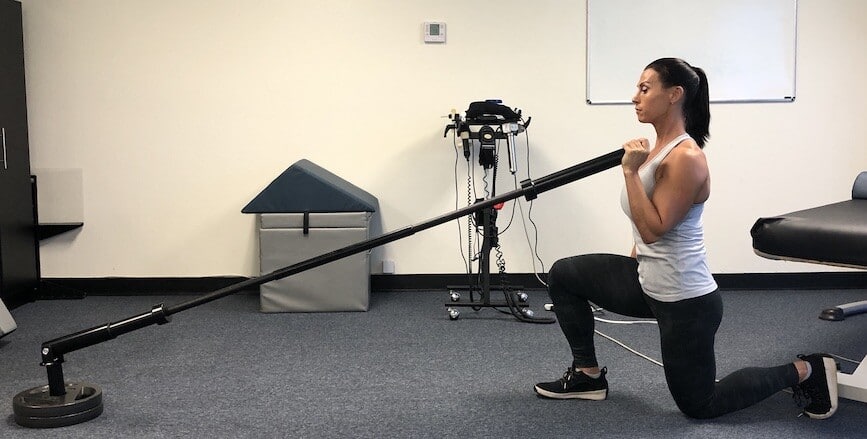
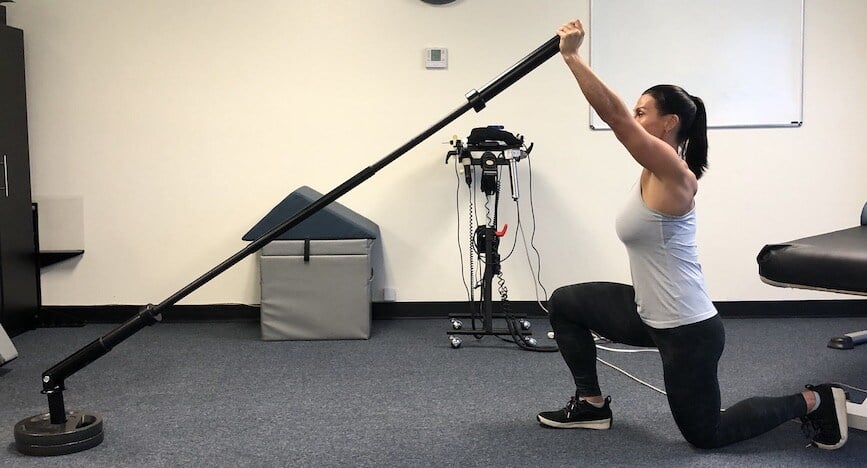
1. Half Kneeling Single Arm Landmine Press
The half kneeling single arm landmine press is a good option for challenging the opposite side of the body at the torso level, since the legs are stable in the split stance position.
All single arm versions can also be landmine chest press movements due to both the arc and how the bar path moves.
This can also be handy for those with lower back discomfort due to hip flexor tension, since the position of the lower lumbar spine can be controlled by pelvic tilting and keeping the hip flexors in a lengthened position.
-
Half kneel with your bottom knee on an exercise mat or pad. -
On the knee side that is down, hold the barbell so that when you press the arm moves in a comfortable motion. -
Use abdominal muscle tension to stabilize your torso as needed.
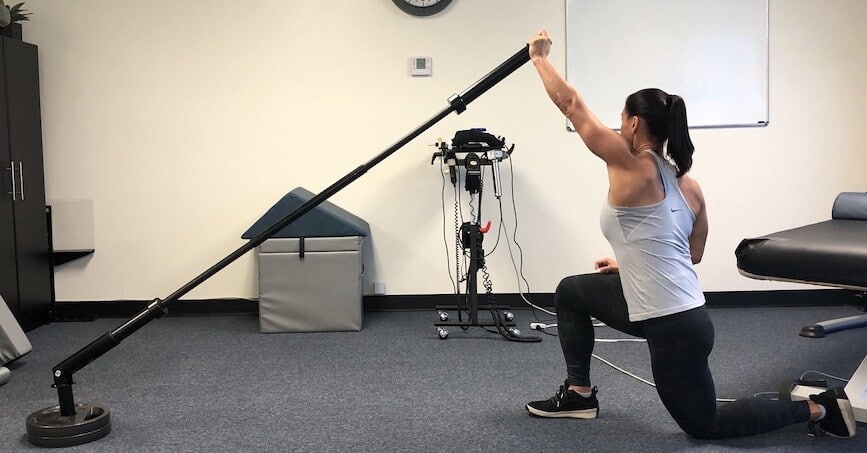
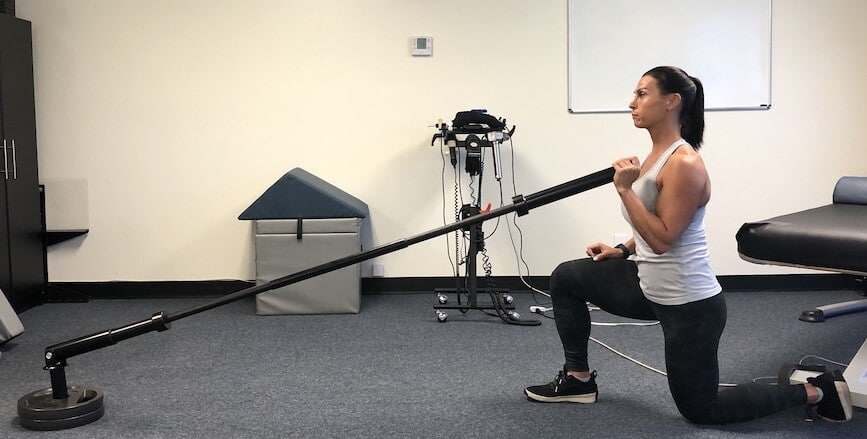
2. Half Kneeling Landmine Press w Rotation
This variation is a progression of the single arm press version, by adding torso rotation to the movement. With less isolation of the shoulder, you can use a bit more weight.
The oblique muscles will be involved to a greater degree on this one.
-
Start in the same position as the half kneeling single arm press. -
As you press with the arm, continue pressing across the midline slightly so that your torso rotates.
3. Standing Landmine Press
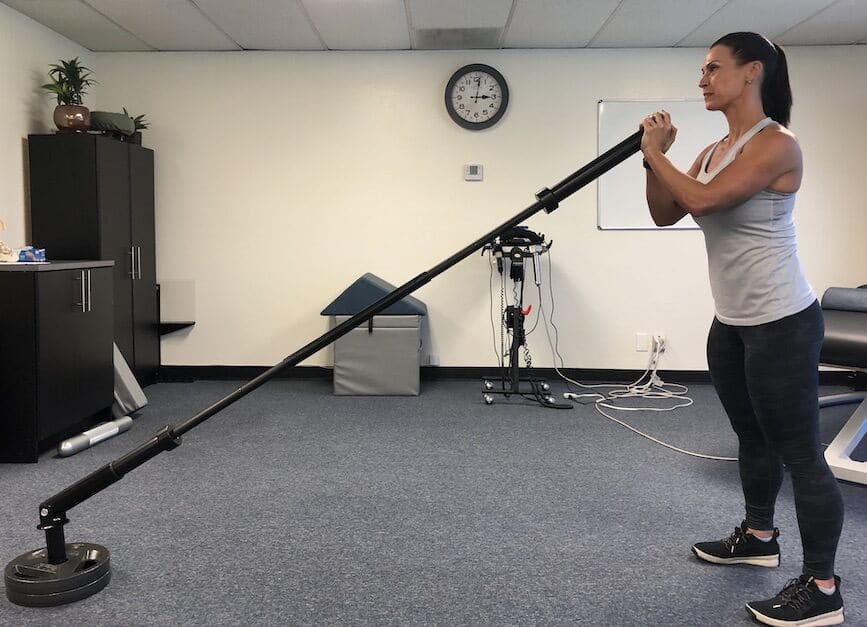
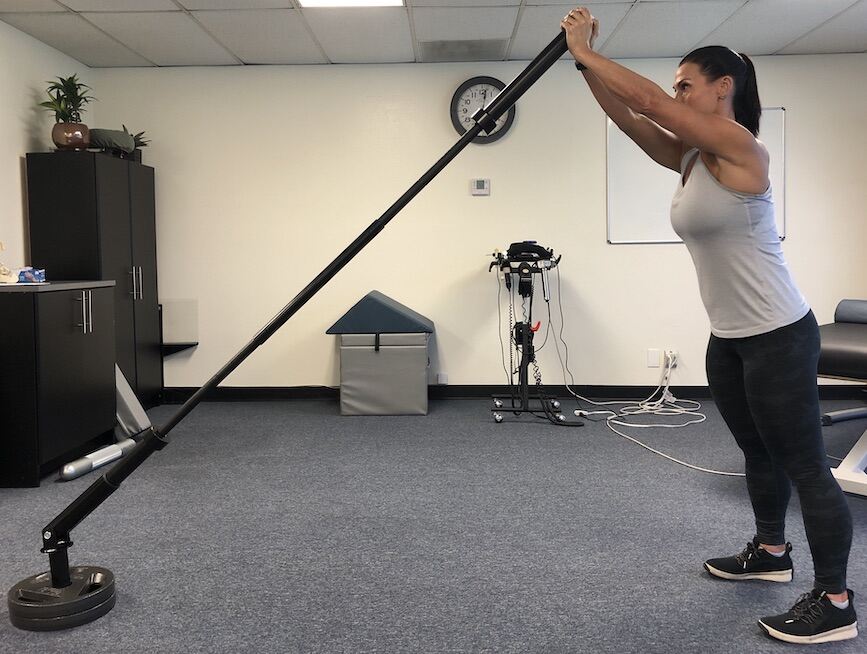
The standing landmine press is a great exercise for loading up the weight. The angle of the press makes it shoulder friendly and good for higher repetitions as well depending on the training goal.
-
Stand with your feet hip width apart in front of the landmine setup. -
Keep your knees slightly unlocked. -
Press your arms out in front of you. You will notice your weight shift forward. -
Adjust your position by stepping forward or backward to get the best leverage and stability.
4. Standing Banded Landmine Press
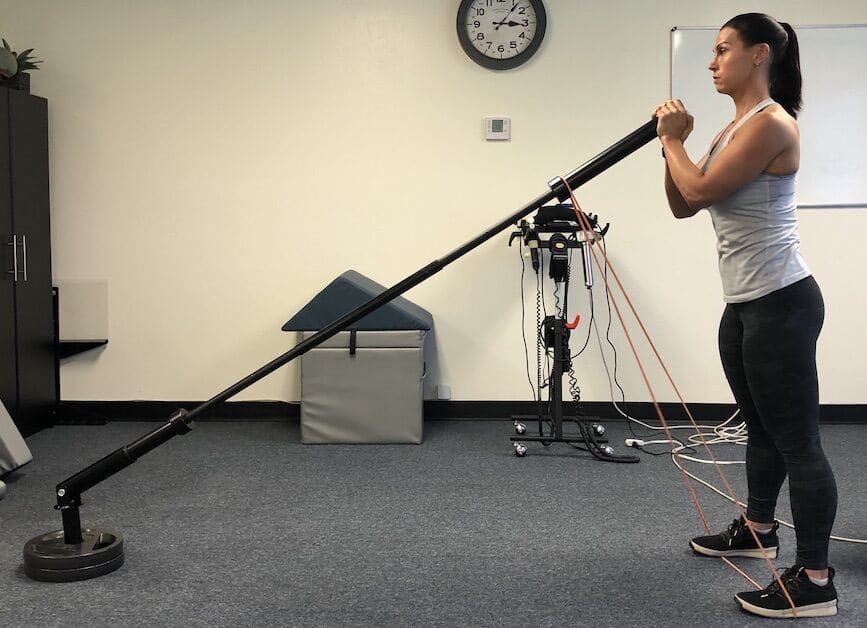
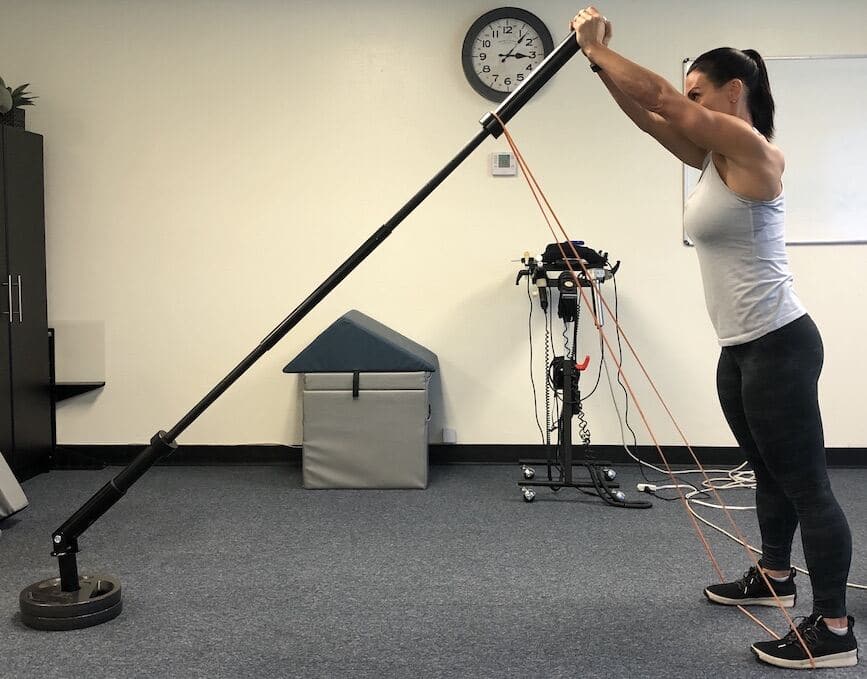
This standing version of the banded landmine press is my go-to for improvement of power and strength in pressing, especially when shoulder limitations are present.
-
Add a light band around the collar of the barbell and stand on the other end of the band. -
Perform this in the same was as the previous version.
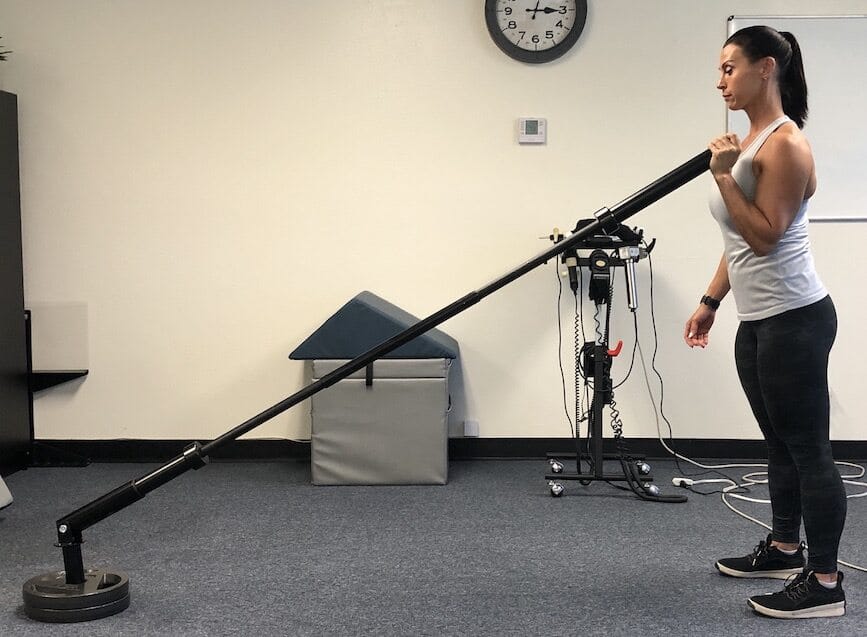
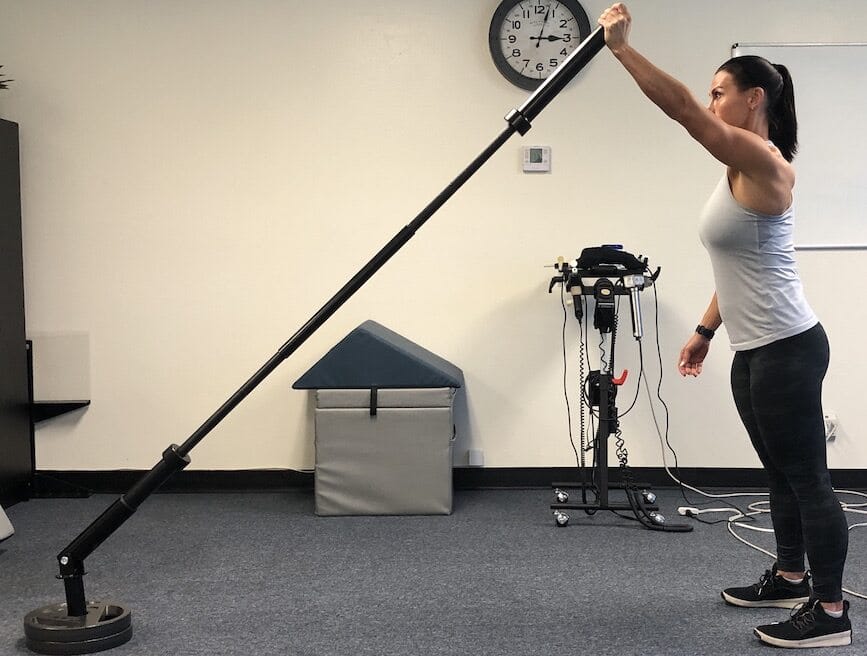
5. Standing Single Arm Landmine Press
The standing single arm landmine press is a great overall functional shoulder press exercise that involves challenge to your stability.
There is a lot of activity in the opposite side of the body to counter-balance the loading on the pressing side.
-
Perform this with the same set up as the 2 arm version, but with 1 arm. -
Use abdominal tension as needed to stabilize your torso.
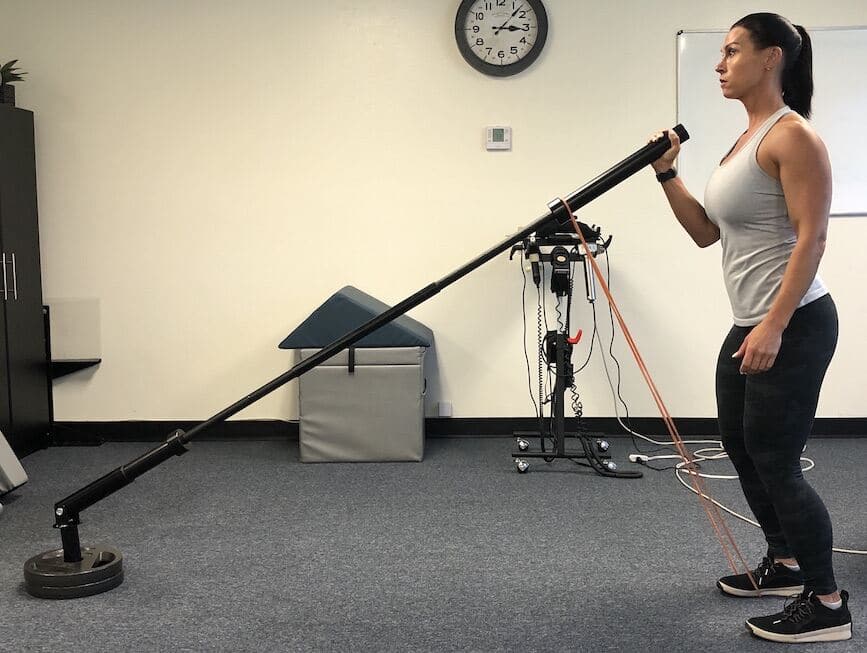
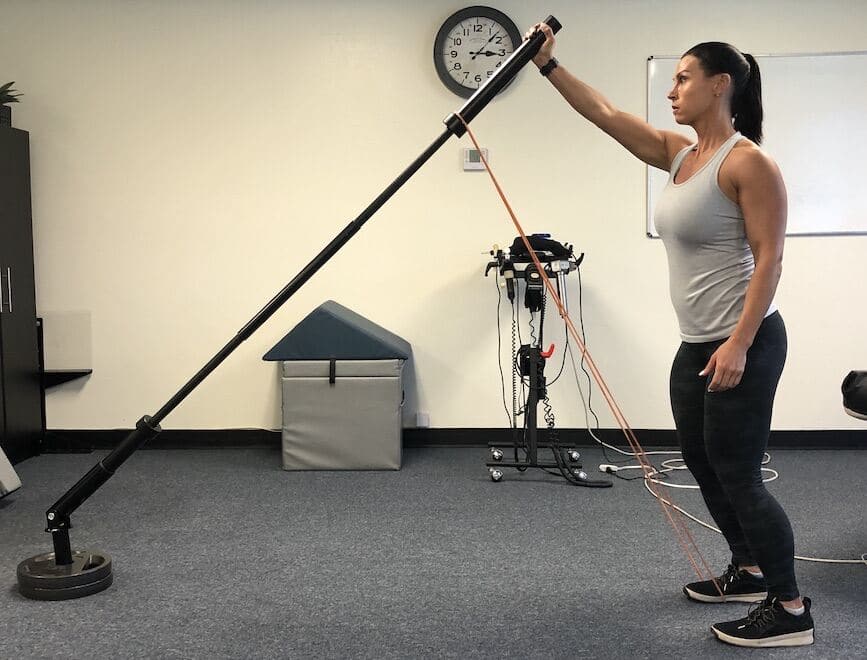
6. Standing Single Arm Banded Landmine Press For Chest
This standing single arm banded press is a good variation to add into a training program that is focused more on power production. The purpose of bands is to add accommodating resistance, but in particular to increase the speed of the eccentric portion of the movement, which favors power development.
The single arm version is a great landmine press for chest fibers in the standing position.
-
Instructions for set up are the same as the 1 arm version, but add the band.
7. Standing Split Stance Single Arm Landmine Press
The split stance version of the single arm landmine press gives you a wider base of support, which means the ability to add more weight to the bar. This is great for lower rep work.
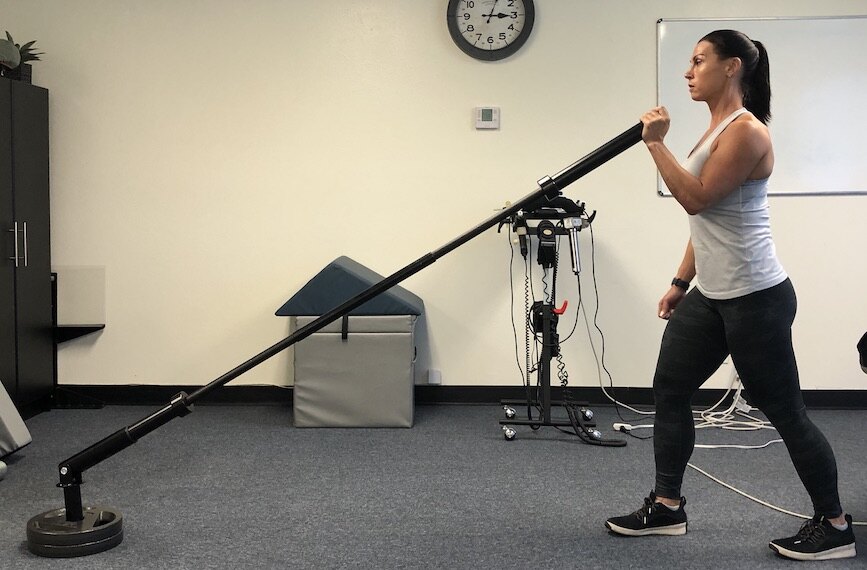
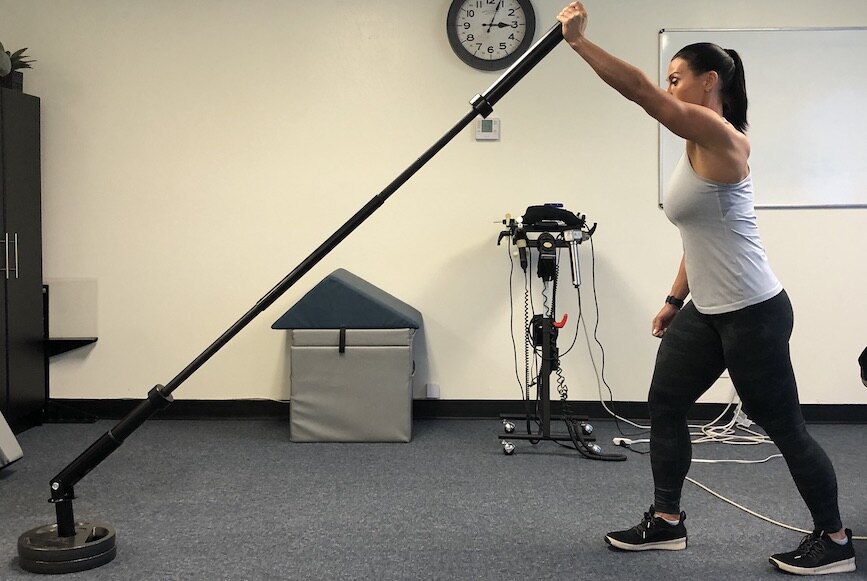
-
On this version, split your stance with one leg forward and the other behind you. Your weight should be mostly on the front leg for stability.
8. Landmine Squat Press
The landmine squat press is a great choice for full-body work, and can be used for a higher rep challenge for conditioning.
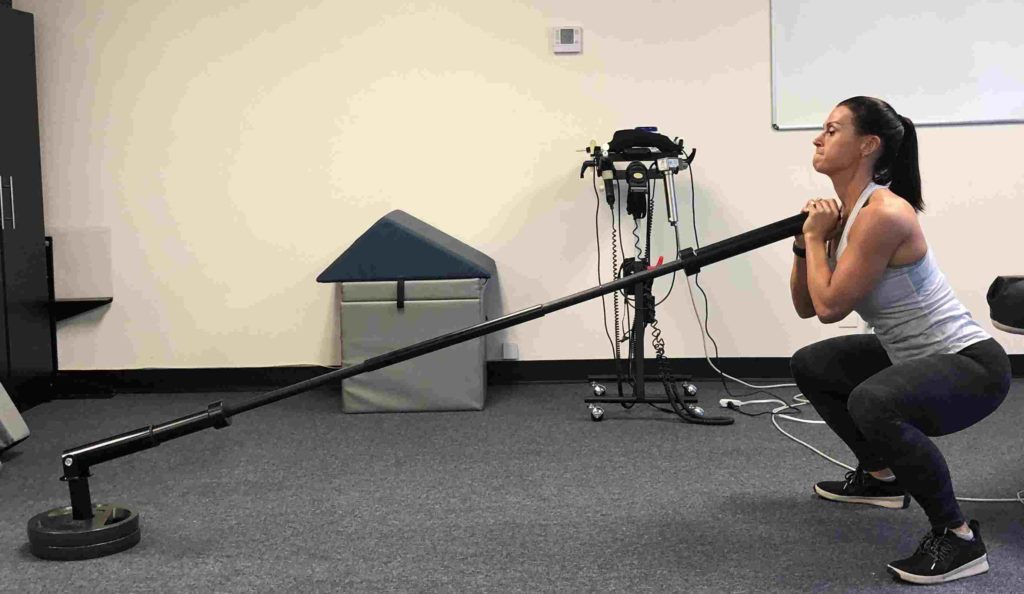
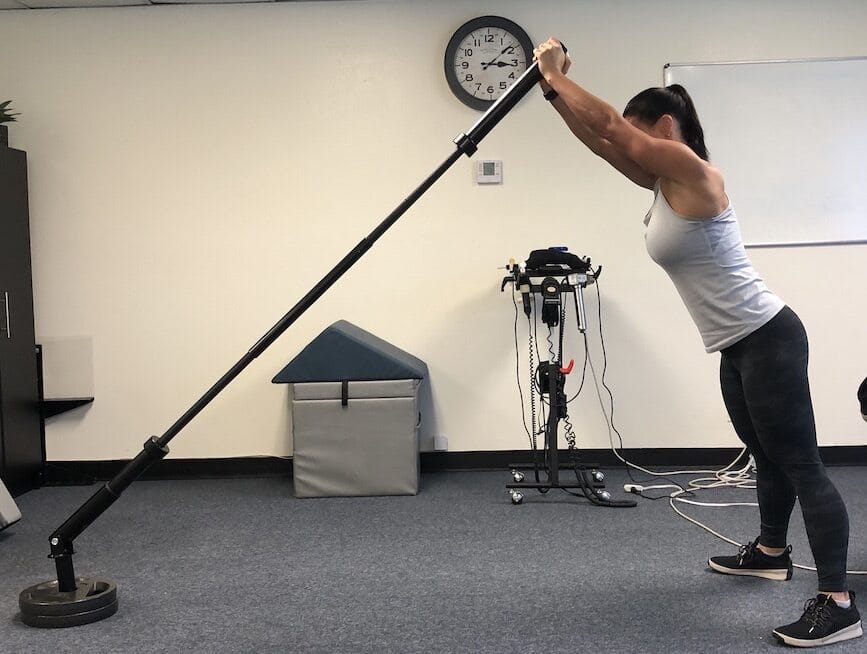
-
This version is performed much the same was as the 2 arm standing landmine press, but with a squat added. -
Think of this as one big movement. So, do not squat, then stand up, then press. You should press as you are returning back up from the squat position.
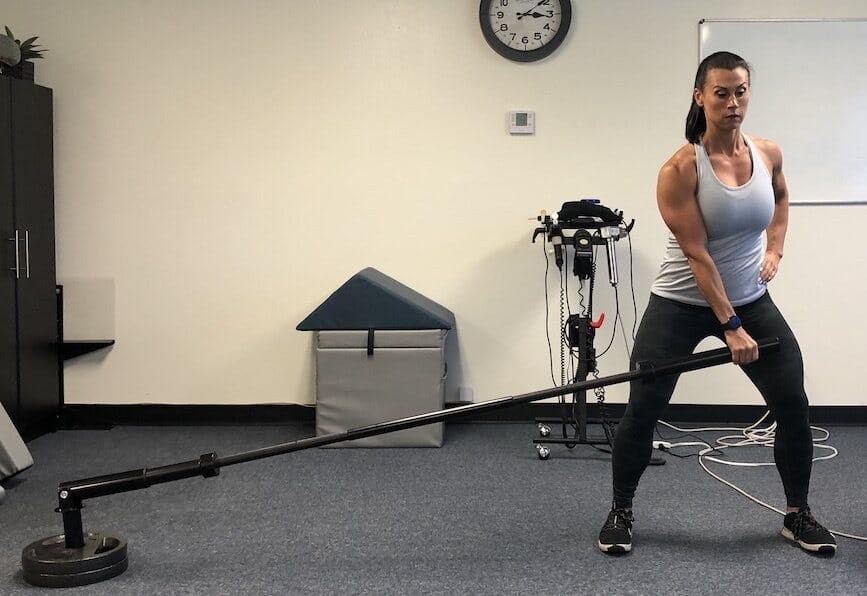
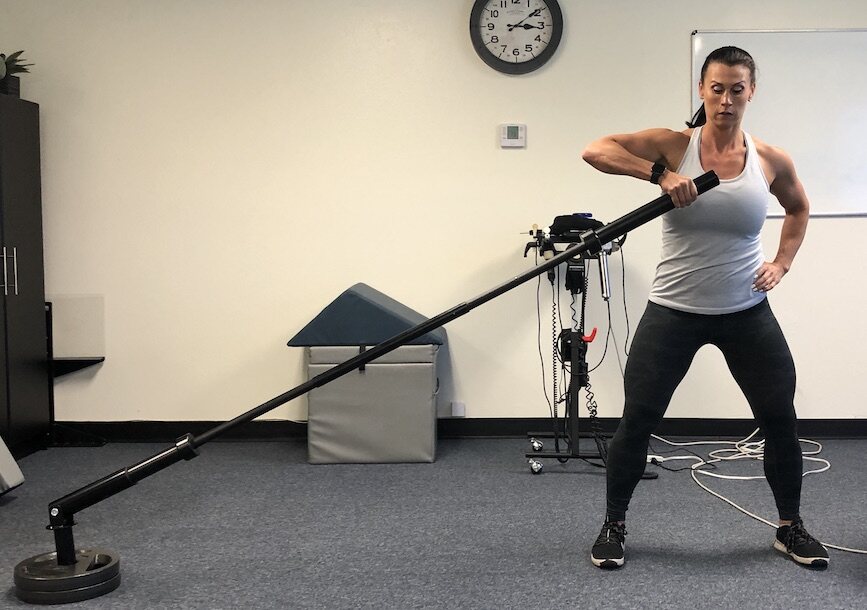
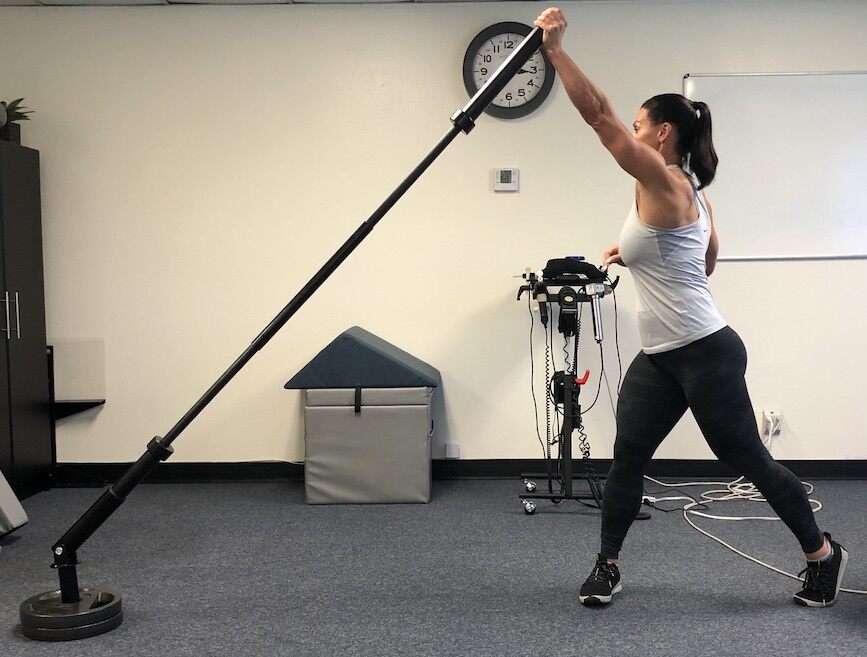
9. Landmine Single Arm Clean + Press
The landmine clean + press is one of the most challenging landmine press exercises for not only the shoulder, but the entire body.
This movement challenges your body in all 3 planes, and is much more technically challenging than the others. Take your time in learning this one and keep the weight light until you attain solid technique competency!
-
This version takes a little practice to figure out the best setup for your height and arm length. -
Perform a slight bend with the barbell in one hand and stand up as you pull the barbell up. -
Grab the barbell with the opposite hand and start to press as you turn.
Special thanks to my colleague and Landmine Press model Brittany Kohnke.
If you’re looking for some variety in your shoulder training and keep them healthy for the long-run, then look no further than the Landmine Row.
The landmine is a special tool that anchors one end of a barbell so that you can use it for a variety of exercises that wouldn’t be possible otherwise.
The landmine creates a bar path that occurs in an arc, which, depending on the exercise, can provide a more natural feeling movement.
Below you’ll find some of my favorite variations of landmine rows.
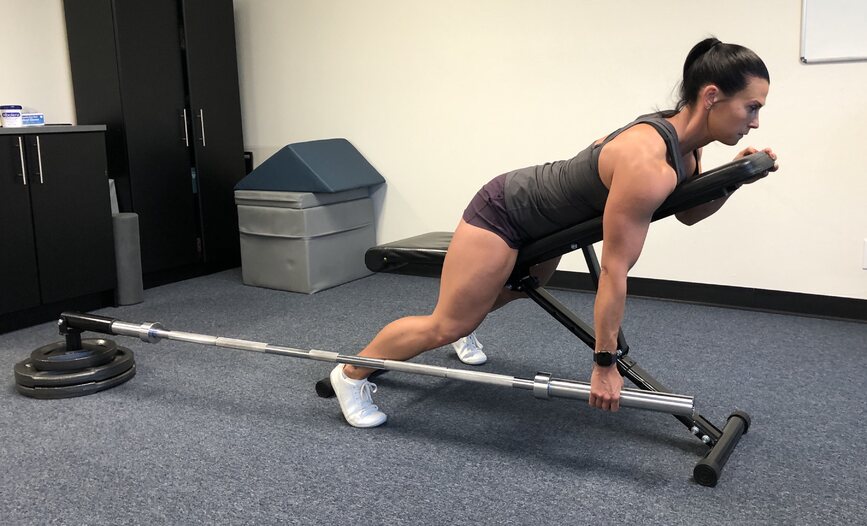
1. Chest Supported Single Arm Landmine Row
The chest supported landmine row is a great option not only for better isolation of the scapular retractor musculature, but also for those dealing with lower back issues.
One of my pet peeves is watching people do rows and using a shortened range of motion, never completing the full scapular retraction. This chest supported version anchors the torso in place and there is less emphasis on rotation.
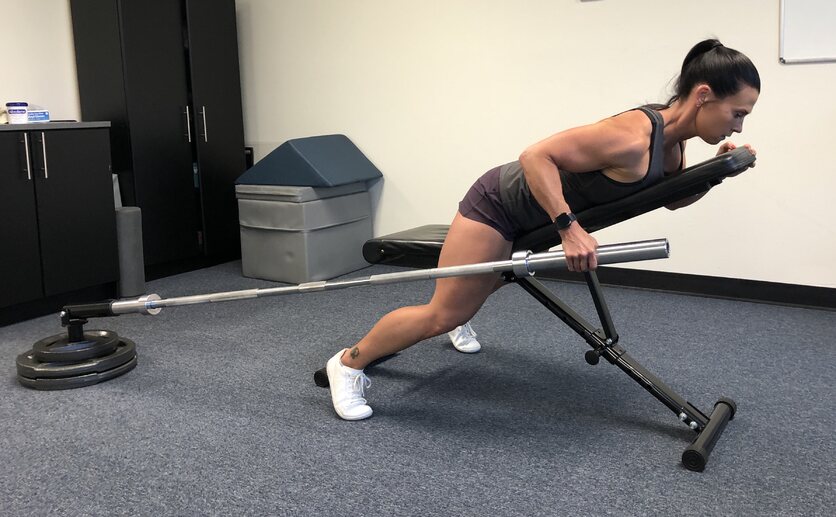
-
Lay face down on a low incline bench next to the landmine set up. -
Make sure when your arm hangs down with the bar your foot is clear of the bar path. -
Slightly lift your chest up to activate your spinal extensors. -
Row the bar up and emphasize a shoulder blade squeeze at the top. -
If you feel it in your lower back, squeeze your glutes.
2. Chest Supported Pronated Single Arm Landmine Row
The chest supported row with the arm abducted (out to side) will place more emphasis on the rear deltoids and rhomboids.
You certainly won’t be able to use much weight on this one, so focus on quality.
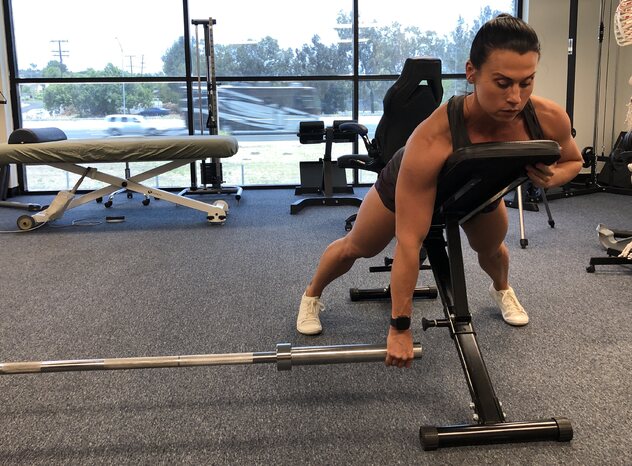
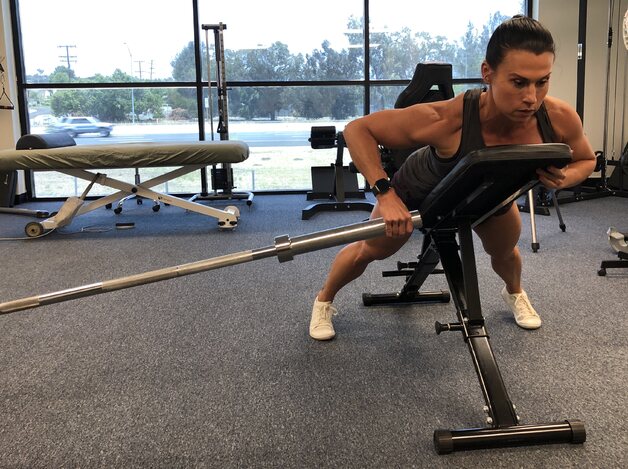
-
Lay face down on a low incline bench next to the landmine set up as shown. -
Brace by grabbing the bottom of the bench with your opposite hand. -
Its common to over-extend the neck on this version, so be sure to elongate your neck by keeping it slightly retracted. -
Row the bar up with your elbow out to the side and emphasize the shoulder blade squeeze.
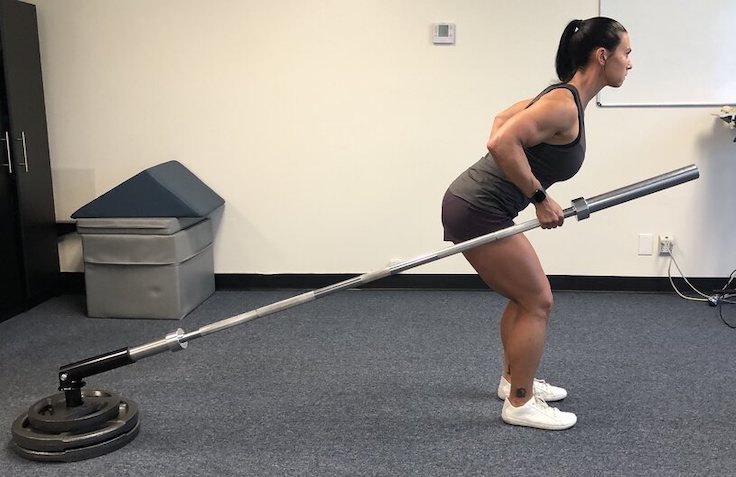
3. Landmine Bent Single Arm Row
The bent single arm landmine row is a good alternative to the standard 2 arm row with dumbbells or barbell.
The offset aspect of the lift forces you to stabilize to great degree with your whole body. Needless to say, this can significantly reduce the amount of weight you can use during this exercise, but it doesn’t make it any less effective.
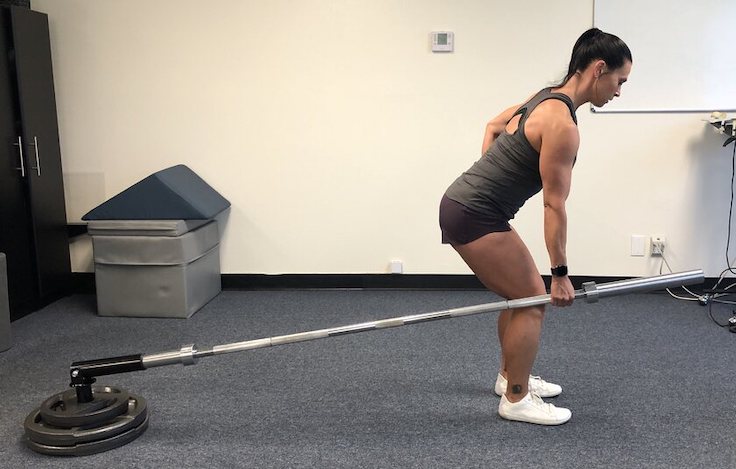
-
Stand with your feet hip width apart next to the landmine setup. -
Bend forward by tipping from your hips and maintaining a slightly arched lower spine. -
When you row, you'll feel your weight shift toward the side that is working. (this is correct) -
Perform the row by thinking about lifting from your elbow, and not from your bicep. This will help you feel it in your lats.
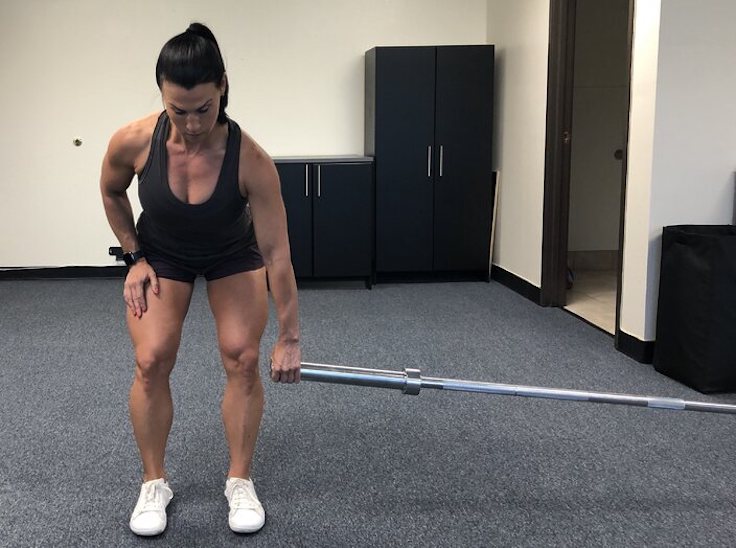
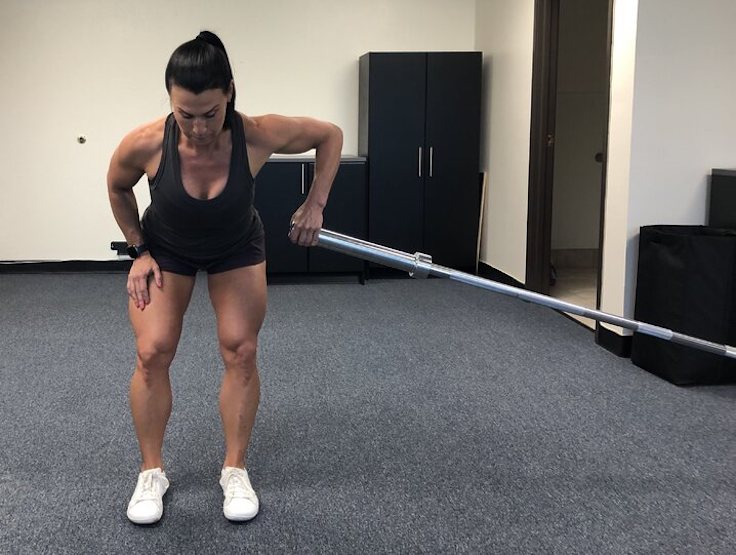
4. Landmine Bent Meadows Row
This bent over landmine row is a modification from what is commonly called the “Meadows Row” in some circles as developed by John Meadows.
-
Instructions for set up are the same as the single arm bent version. -
Use an overhand grip with your elbow out to the side for this row variation. -
Since everyone has different body proportions, you will need to test your set up to get the most natural feel for the row, so start light!
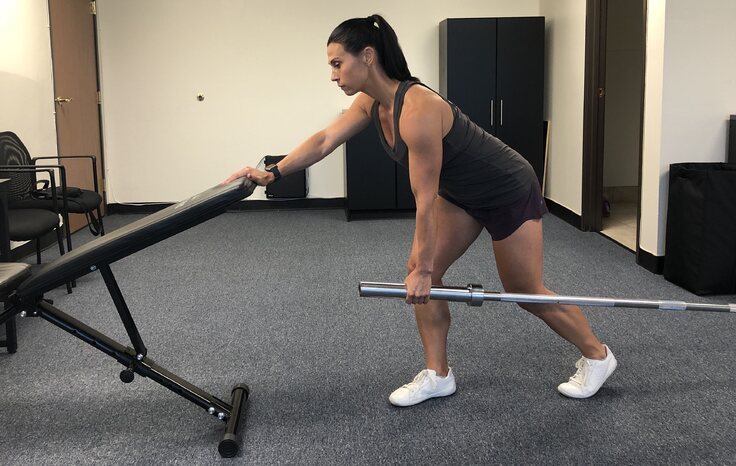
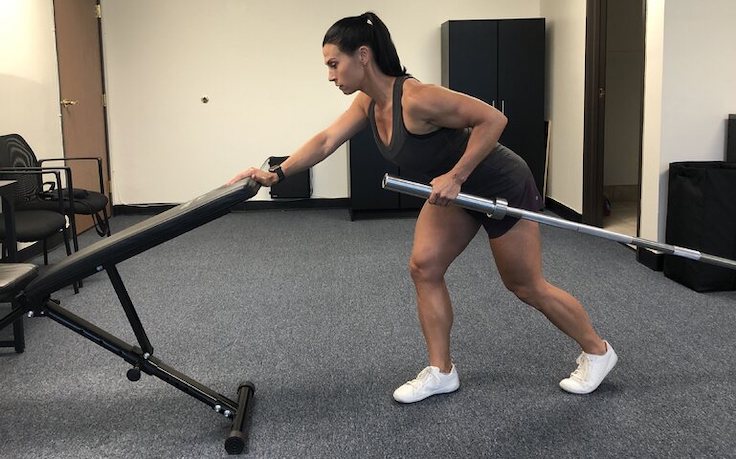
5. Landmine Supported Row
The landmine supported row is a great version for loading up the weight. The split feet stance and holding onto a support gives you a lot stability.
-
Stand facing a bench or equivalent and split your stance so that the leg is back on the rowing arm side. -
Tip forward from your hips while maintaining a slight arch in the lower back. -
On this version, you can use more of your legs for a more full body rowing exercise.
Special thanks to my colleague and Landmine Row model Brittany Kohnke.
 Biomechanics of the lower body are not as simple as they might appear. There’s quite a bit of pressure involved in every step we take, and even if we take it for granted, our feet and knees are always subject to a lot of stress.
The good news is, we are built to handle this kind of stress. There are some specific circumstances, however, that can cause us to need some extra help. This is where orthotics may be helpful.
Orthotics is a speciality that focuses on creating devices called orthoses. There are shaped according to the contours of your limbs or to stabilize, alter or reduce range of motion, depending on what they are being used for.
In foot orthoses, special inserts like arch supports, or even special shoes can be designed with the intent on changing how we walk or run.
All of this sounds very powerful in its potential to affect the body, and many people presume all sorts of physical issues may be improved by the use of orthotics for the feet, but does it really work this way?
How effective are orthotics really?
Do you really need orthotics?
The orthotics field is complex, and if we want to consider the relationship between orthotics and pain, we have to narrow down the focus to two different types of pain that are pretty common: foot pain and lower back pain.
One of the most reliable sources of scientific info comes from Cochrane reviews, and one of them analyzed whether or not custom-made foot orthoses are helpful to address foot pain.
The authors concluded that there is very good evidence that they improve pain in SPECIFIC pathologies, such as pen cavus, plantar fasciitis, hallux valgus, and various types of arthritis.
If any of these aren’t present, according to their review, there is limited evidence for assigning custom-made foot orthotics (1).
What about back pain? Since there is not that much evidence, this is where the controversy shows up. If we look through the literature, some studies show that id does work to alleviate back pain.
However, after taking a looking further into the research, there appears to be a lack of real scientific arguments, while others report that orthotics for back pain have the same effect as placebo.
Despite the apparently reasonable-sounding claims by people who want to make the sale, there are 4 main issues that appear to benefit from orthotics, and a few others that might as well:
- Plantar fasciitis: This is essentially inflammation in the sole of the foot, around the heel and arch. It’s quite painful in the morning, and is thought to be often caused by increased pressure over your plantar fascia ligaments (2,3).
- Arthritis: When arthritis affects the joints of the foot, orthotics might come in handy. This is especially true in the case of things like deformative arthritis like rheumatoid arthritis (4). Still, according to the literature, arthritis by itself is not an indication for orthotics, and they are often used when it’s not really necessary (5).
- Metatarsalgia: In this case, an evaluation of the gait cycle and abnormalities of the foot may be needed to find the potential source of pain. In some cases, it is associated with overloading abnormalities, and orthotics may come in handy and improve symptoms in both the short and long term (6,7).
- Diabetes and other foot-related pathologies: Pathologies that compromise circulation of the foot may require orthotics in order to reduce pressure on the planter foot and in the incidence of some complications, such as in the case of diabetes (8).
So, what if you do NOT have any of these issues? Can orthotics help?
Well, it’s possible, but there isn’t much research to support the use of them in such cases.
What about orthotics to improve postural pain?
You may have noticed that back pain is not listed as a problem that requires the use of orthotics…
That’s because there’s no clear evidence that they can directly improve back pain issues!
You might be wondering, ok…but what about improving posture? Doesn’t improved posture mean less pain?
Of course one of the most common arguments is that orthotics will improve posture as a result of changing gait, and as a result, back pain is resolved.
This depends greatly on WHY the postural issue exists. (well beyond the scope of this blog post). In short, most back pain is classified as “non-specific”, and it’s often resistant to most forms of standard therapy.
This is because there’s most often many sources of input that contribute to the pain (speaking especially toward chronic back pain) and trying to address it with a pair of orthotics isn’t going to work (9).
So, even though poor posture, work ergonomics, etc. can contribute to pain, it’s often given way more importance than it deserves.
One area to look at is leg length differences. It’s often thought that if you have a “short leg”, your gait will become irregular and you will end up with some type of physical pain, whether it be knees, hips, lower back, etc.
Studies show that assessments of leg length differences are likely to be biased, even in chiropractors with over 30 years of experience (10)!
Even if you do have a significant difference, it is clear that people with this problem do not have more back pain issues relative to everyone else (11).
Orthotics for lower back pain: Yay or Nay?
A recent systematic review and meta-analysis of several clinical trials on shoe insoles and its relationship with low back pain state that there is not enough evidence to support the use of insoles to treat or prevent low back pain (12).
Even though some studies claim that there’s a significant improvement after using orthotics (13), the truth is that after analyzing the methodology of their studies, there’s a statistical but not a clinical significance. In other words, even though their statistics might seem to indicate that there’s an improvement, it is not translated into real value in the clinical practice (14).
So to sum it up, orthotics appear to be most helpful when they are used for specific types of pain, mainly located in the foot and associated with overloading and pressure problems.
Since orthotics, especially when custom-made, can get pretty pricy, they clearly aren’t the go-to when it comes to other types of chronic aches and pains.
They certainly don’t have more direct value than hands-on massage techniques, exercises, stretches, and self-mobility drills.
Are you in the Los Angeles area and need help with chronic aches and pains? Click below and let’s talk.
 Most health professionals recommend resting the area affected by an acute injury in order to recover. In many cases, due to the extent of the injury, this may absolutely be necessary. However, it appears that recently the tide is turning in terms of how soon movement is recommended in order to speed recovery from certain types of injury or even surgical procedures.
In fact, getting things moving again may reduce the risk of developing chronic pain.
Movement has different effects in the acute vs. chronic pain sufferer, but the process we are going to discuss in assigning it is focused on the chronic pain sufferer. This concept is called graded exposure.
Pain itself can be warning sign that protects us from re-injury, but sometimes people adopt an undesired pain-avoidance behavior that does more harm than good. The concept of graded exposure has been designed with these individuals in mind.
Fear of movement and re-injury
Pain and common disabilities associated with it are influenced by many different things, and some of them do not appear to respond to a structural-biomechanical approach. Psychological and psychosocial factors play an important part, and individuals with fearful thoughts related to movement often experience more pain and disability in the long run.
It’s also known that longstanding avoidance of movement and compensatory strategies (altered movement due to previous injury or fear of movement) may lead to a progressive impairment of movement skill.
Thus, we need to differentiate pain disability and the disability that results from something like a musculoskeletal problem. Sometimes, musculoskeletal problems are gone, injuries are healed, but the disability remains due to fear of movement and avoidance behavior.
It appears that often health professionals that work with individuals that suffer from chronic pain tend to forget is that perhaps the primary obstacle that is being experienced isn’t the tissue itself, but the fear of performing certain activities or movements because the individual believes they are re-injuring the painful area.
What is graded exposure?
Graded exposure is that concept that is based on progressively exposing individuals to increasing levels of stress in order to stimulate adaptation in the central nervous system.
It can significantly reduce sensitivity to movement and avoidance behaviors that contribute to chronic pain.
What needs to be considering in graded exposure is applying just the right amount of stress that will not cause any setbacks in progress, but instead stimulate adaptation.
This principle is easily applied to areas such as muscle building, for example. Every workout session, the stress increases just a bit more, either through more repetitions or added weight. Doing too much hampers progress, and may lead to injury.
We can easily apply this concept to virtually all therapeutic modalities, including exercise, stretching, massage therapy, neuromuscular techniques (such as muscle energy techniques), and much more.
Is there a difference between graded exposure and graded exercise?
There are many applications of graded exposure, and we should differentiate this to graded exercise. Graded exposure is a concept of progressively increasing stress to overcome the fear of movement and modulate the nervous system, but as mentioned, can be applied to many different types of therapeutic modalities.
Graded exercise is a common meth0d that is meant to teach an individual that they can do certain movements and reach certain ranges of motion via a progressive approach. This is especially helpful for individuals that suffer from chronic pain and are afraid to perform certain movements or activities.
As it is, graded exposure is part of graded exercise, and it’s certainly possible to apply the principles of both at the same time.
Graded exposure and adaptation of the nervous system
Several studies have identified a strong link between pain perception and mood. Anger and negative emotions lower the pain threshold, making us more sensitive to pain, and giving us extra reasons to feel irritable.
Thus, it is widely accepted that our psychological and social circumstances modulate our interpretation of pain, and our reactivity and levels of vigilance. Our perception of safety is also important, and this is what progressively changes during graded exposure.
Achieving a dosage of stress that triggers very low-intensity pain with a controlled movement is away to send a signal to your nervous system that this move or particular range of motion is safe to perform.
In time, it will feel more comfortable and less pain will occur with this movement because you will have adapted to this stressor. More stress can be applied to create further adaptation, and reduce the pain “alarm” further as your nervous system becomes de-sensitized to the stimulus.
This technique is generally based on mainly observational and anecdotal evidence, but there is also scientific literature that establishes the foundations and the role of graded exposure in cases of pain.
Still, there is no final guideline or definitive recommendation to guide the application of graded exercise in particular. This is where the art of the work and experience comes into play.
There are some principles that are helpful to follow:
- Assessing fear of movement: There are many potential ways to assess fear of movement. From graded tests to simple client interview and demonstration.
- Implementation of movements and stress loads: Sometimes there are multiple movements that are problematic, and/or activities that don’t produce discomfort until load is applied. These can be divided up and dealt with one at a time. Improvements in some movements may directly improve others without specifically addressing them!
- Re-evaluation and modifications: After a given time that depends on the individual’s situation (often times within the same visit), the problematic movements or tests can be repeated, and adjustments made to further improve the response.
The bottom line is that graded exposure and exercise can be an extremely valuable component of any chronic pain sufferer’s movement and/or massage therapy program.
The power lies in identifying activities, movements, ranges of motion, and other factors which trigger fear, or avoidance, and creating a plan to systematically reduce or eliminate that fear by starting with education, then selecting an appropriate low-threatening way to begin, and progressing over time as results are attained.
References:
Vlaeyen, J. W., Kole-Snijders, A. M., Rotteveel, A. M., Ruesink, R., & Heuts, P. H. (1995). The role of fear of movement/(re) injury in pain disability. Journal of occupational rehabilitation, 5(4), 235-252.
Tuna, Z., & Oskay, D. (2018). Fear of movement and its effects on hand function after tendon repair. Hand surgery and rehabilitation, 37(4), 247-251.
George, S. Z., & Zeppieri Jr, G. (2009). Physical therapy utilization of graded exposure for patients with low back pain. journal of orthopaedic & sports physical therapy, 39(7), 496-505.
Are you in the Los Angeles area and need help with chronic aches and pains? Click below and let’s talk.
 There are few things in the health field as versatile as exercise. It is commonly recommended and sometimes prescribed a s part of the therapy for various health conditions.
Even though we assume this type of recommendation for people with excess weight and even cardiovascular issues, it is also very helpful for people that suffer from chronic pain.
First, before diving into this topic, we need to separate exercise into two main types: aerobic and anaerobic. Aerobic exercise is also known as cardiovascular (cardio), and anaerobic exercise is known as resistance training, weight training, or strength training.
Below, we’ll evaluate what the research shows when it comes to the effective use of anaerobic training to relieve chronic pain.
Do pain symptoms improve with resistance training?
While many studies show that resistance training improves pain symptoms, other show it might not be all that useful. This can definitely seem confusing, but this discrepancy can exist for a few potential reasons, including the type of pain that is being experienced, and of course the WAY the training is being performed.
If you have a properly designed program and you’re doing everything correctly, you’ll likely to get improvement from some types of chronic pain (1).
A recent review and meta-analysis of resistance training and chronic lower back pain show that aerobic exercise and resistance training were both associated with a significant reduction in pain intensity. However, resistance exercise displayed an added benefit to the psychological well-being of the individual, which is essential to modulate the perception of pain. (2).
It’s also interesting to note that there are many variants of resistance training, and each of them has proven to reduce pain in a different way. For instance, we can divide resistance training into static and dynamic muscle contractions.
Static muscle contraction, which includes isometric exercise (muscle contraction with no movement), is associated with a moderate-to-large modulation of pain, and certain studies have found that maintaining contraction at a low weight for a longer time recruits and exhausts more muscle fibers, leading to a more significant exercise-induced-hypoalgesia.
On the other hand, dynamic resistance, which is performed essentially by shortening and lengthening the muscles, has been found to have similar effects, but usually in the short-term (3).
When and how is strength training appropriate for chronic pain?
Resistance training can be utilized for various types of chronic pain, including fibromyalgia, which is known to be a fairly challenging condition.
Fibromyalgia is a pain condition that is highly variable between people that have it, and it’s associated ultimately with a dysfunction of the nervous system and increased susceptibility to pain experience.
Most of the information out there shows that controlling pain in fibromyalgia is an extremely challenging venture. Even so, “old-school” resistance training is still an effective way to reduce the sensation of pain and tenderness, and maintain or increase muscle strength in these individuals.
According to a Cochrane review, aerobic exercise is superior to moderate intensity resistance training in some cases, so it appears to be a good idea to combine them to some degree (4).
One of the more common applications of resistance training in chronic pain is associated with things like repetitive strain injuries. For example, a randomized control trial focused on strength training to treat working populations that had repetitive strain injuries, some of which had a work disability.
They underwent 10 weeks of strength training against the usual ergonomic care that is recommended to address this kind of pain. Strength training showed significant improvements in hand/wrist pain and reduced time to fatigue by an impressive 97% (5).
Achieving these improvements in chronic pain with resistance exercise is not so difficult. All we need is to choose key exercises per muscle group, include one or two sets for each exercise, choose the appropriate weight to perform a correct technique without a problem, and resting between sets a few minutes.
Each repetition should be performed at medium-speed, and doing this twice every week for each muscle group is usually enough for good results. This is in accordance with the current recommendations of physical activity for health by the World Health Organization, which includes 150 minutes of moderate physical activity (aerobic exercise) a week combined with muscle-strengthening activities 2 days a week or more (6).
Common obstacles and risks of resistance training
Generally in order to be effective, resistance training needs to be done 2-3 times per week. This sounds easy, but there are some obstacles to be aware of.
- You may not feel immediate improvements: Even though there’s a connection between resistance training and pain sensitivity, it does not produce rapid shifts in pain perception like modalities such as massage or relaxation training. Real improvements in this area take time, as much as 12 weeks to see the true benefits.
- It’s about changing your mindset and lifestyle: Resistance training will require time commitment and persistence. If you’re not committed or lack the ability to stick to it, you aren’t likely to get the outcome you are seeking.
Resistance training may not be the thing that everyone needs for their type of chronic pain, or it may not fit into their needs at a particular time.
Here are a few more things to be aware of:
- Strength-training injuries: Hitting the weights without any professional help, and no mastery of exercise technique may not only reduce the benefits, but also get you injured. Getting injured in the process of trying to relieve pain is a common issue, and this is why you should seek help from a professional!
- Imprecise exercise protocols for the type of pain: Certain types of chronic pain won’t respond well to aggressive resistance training. Some, like fibromyalgia, need to be very closely monitored because the training program may constantly need to be adjusted based on how the person is feeling. Frozen shoulder is another issue that may not respond well to strength training at all, and in fact may make it much worse.
Summary
Resistance training (anaerobic exercise) certainly has its place in the therapeutic regime of the chronic pain sufferer and has been shown to be highly effective, but it must be applied to the right kind of pain issue, in the right way, and progressed over time as the person adapts to the program.
Are you in the Los Angeles area and need help with chronic aches and pains? Click below and let’s talk.
 Exercise is often recommended for many different health conditions, especially those related to the cardiovascular system, but it’s certainly not the only area where it may be extremely valuable.
Living a sedentary lifestyle is a fairly significant risk factor for health issues, and it not only limited to stroke and heart disease.
Chronic pain is included in the list of reasons to recommend physical activity, and even though many people are apprehensive of being more active when they have pain, studies show that it works and improves symptoms both in the short and long-term.
There are two main forms of physical activity (aerobic and anaerobic), and each of them is associated with an improvement in chronic pain.
We’re going to focus on aerobic exercise (often referred to as “cardio”), and how pain mechanisms can be inhibited by this simple form of movement.
What happens when you do aerobic exercise?
During aerobic exercise, the most significant changes involve the respiration and cardiovascular systems. Your muscles play an essential part, and the stroke volume of your heart increases to make up for the increased requirement of oxygen and nutrients.
Thus, the function of your capillaries is enhanced, and the part of your cells that produces energy, called mitochondria, increases in both number and efficiency.
Additionally, there are many nervous system and hormonal adaptations that occur after aerobic exercise. These changes improve both strength and stamina, and have the ability to reduce insulin resistance and other metabolic problems.
Aerobic exercise can also play a role in improving flexibility, balance, coordination, and also positively impact muscle/postural asymmetry.
All of these improvements can be associated to various pain inhibitory mechanisms we’ll discuss below.
How does aerobic exercise inhibit pain?
The exact mechanism by which physical activity improves chronic pain symptoms is not entirely understood. Unfortunately the vast majority of clinical trials do not make a clear distinction between aerobic and anaerobic physical activity when examining the effects of exercise on pain perception.
Most of these studies are a combination of interventions, therapeutic recommendations, and patient education, which makes it even more difficult to set aside and evaluate the differences between aerobic and anaerobic exercise separately.
That said, it is still possible to make a distinction based on what we do know by looking at the short and long-term effects of aerobic exercise.
Short-term pain inhibition from aerobic exercise
Reduction of pain perception, called hypoalgesia, has been reported after physical activity in healthy individuals, people with chronic pain, and experimentally-induced pain.
There are two mechanisms involved in this short-term numbing effect: one of them is the release of endorphins, and the other is a modulation in the pain pathways in the central nervous system.
According to studies, after high-intensity aerobic exercise, there’s a hypoalgesic (numbing) effect lasting approximately 30 minutes. This effect is longer compared to resistance training exercise (anaerobic exercise), which lasts only a few minutes.
Studies seem to show that more exercise or a higher intensity is related to more hyperalgesia. The suggestion is that to generate a considerable effect we should engage in high-intensity physical activity for more than 10 minutes or moderate to high physical activity for 30 minutes or more.
Now of course you can imagine this wouldn’t work in a number of scenarios. For example some clinical trials have reported an INCREASED pain response instead of pain inhibition in cases of individuals with severe chronic pain.
People with fibromyalgia, for example, do not have immediate pain inhibition after physical activity, but of course they can still benefit from exercise in the long run.
Long-term pain inhibition from aerobic exercise
The long-term pain inhibitory effects of aerobic exercise are only reported in individuals that maintained a regular program of activity.
Long-term activity is known to modulate the endocannabinoid system (natural cannabis-like molecules produced by the human body), reduce the inflammation by improving circulation, and normalize transmission of glutamate in the brain and pyruvate in the muscle tissue.
By altering the release of inflammatory substances and improving circulation, it is possible to reduce swelling and other symptoms that may be associated with some chronic pain issues.
The endocannabinoid system in particular has a strong inhibitory effect that’s commonly targeted by pain medications. This system is also modulated by aerobic activity after releasing endorphins.
Additionally, glutamate and pyruvate are essential for sensory perception in the muscle tissue and its transmission in the central nervous system. Thus, by reducing these substances, physical activity may modulate pain perception in the long-run.
Psychological effect of exercise
We can’t talk about pain perception without including the psychological function. It is well established that depression, anxiety, and similar mental health problems have a negative impact on pain perception.
Individuals that engage in aerobic exercise usually report a significant improvement in mood and psychological symptoms, which may have a positive effect on the chronic pain experience. There are not, however, enough studies to evaluate these changes in a large amount of people suffering from chronic pain.
So, does aerobic exercise help?
In a nutshell, aerobic exercise is known to reduce pain perception immediately after exercise and in the long-run. However, for long-lasting results, it is necessary to engage in sustained activity, and most cases of chronic pain would also benefit from combining some aerobic exercise with anaerobic exercise.
By joining the strengthening nature of anaerobic exercise and the physiological changes mentioned in this article, it is possible to reduce pain symptoms and improve quality of life for chronic pain sufferers.
References:
Kawi, J., Lukkahatai, N., Inouye, J., Thomason, D., & Connelly, K. (2016). Effects of exercise on select biomarkers and associated outcomes in chronic pain conditions: systematic review. Biological research for nursing, 18(2), 147-159.
Naugle, K. M., Fillingim, R. B., & Riley III, J. L. (2012). A meta-analytic review of the hypoalgesic effects of exercise. The Journal of pain, 13(12), 1139-1150.
Nijs, J., Kosek, E., Van Oosterwijck, J., & Meeus, M. (2012). Dysfunctional endogenous analgesia during exercise in patients with chronic pain: to exercise or not to exercise?. Pain physician, 15(3S), ES205-ES213.
Bender, T., Nagy, G., Barna, I., Tefner, I., Kádas, É., & Géher, P. (2007). The effect of physical therapy on beta-endorphin levels. European journal of applied physiology, 100(4), 371-382.
Koltyn, K. F. (2002). Exercise-induced hypoalgesia and intensity of exercise. Sports medicine, 32(8), 477-487.
Sajedi, H., & Bas, M. (2016). The evaluation of the aerobic exercise effects on pain tolerance. Sport Science, 9, 7-11.
Naugle, K. M., & RILEY 3rd, J. L. (2014). Self-reported physical activity predicts pain inhibitory and facilitatory function. Medicine and science in sports and exercise, 46(3), 622.
Gerdle, B., Ernberg, M., Mannerkorpi, K., Larsson, B., Kosek, E., Christidis, N., & Ghafouri, B. (2016). Increased interstitial concentrations of glutamate and pyruvate in vastus lateralis of women with fibromyalgia syndrome are normalized after an exercise intervention–a case-control study. PloS one, 11(10), e0162010.
Ghafouri, N., Ghafouri, B., Fowler, C. J., Larsson, B., Turkina, M. V., Karlsson, L., & Gerdle, B. (2014). Effects of two different specific neck exercise interventions on palmitoylethanolamide and stearoylethanolamide concentrations in the interstitium of the trapezius muscle in women with chronic neck shoulder pain. Pain Medicine, 15(8), 1379-1389.
Are you in the Los Angeles area and need help with chronic aches and pains? Click below and lets talk.
Including In This Video:
- How do you deal with S-Curve Scoliosis? 0:00
- What to do about Xyphoid process issue? 4:36
- How to approach Shoulder Impingement? 6:50
- What stretches to do after workouts? 10:44
- How to approach Sacroiliac Joint issues? 14:42
Lorem ipsum dolor sit amet, consectetur adipiscing elit.
Exercise after massage?
When is comes to the question of whether or not you can exercise after massage work, we need to consider the context and goals.
For example, is the ultimate goal for relaxation?
If simple relaxation is the goal of massage work, then it wouldn’t be recommended to exercise afterward. Relaxation is associated with increased parasympathetic nervous system activity, and exercise is generally associated with sympathetic nervous system activity. Thus, these are antagonistic concepts.
If pain relief and/or increased range of motion is the goal, then specific types of exercise or movement would be helpful after the massage work.
Let me give you an example. Let’s say your neck is limited in rotation to the right due to some muscular tension and it’s been causing discomfort. After the massage session, neck rotation is improved due to less muscle tension.
The results can be maintained by simply doing repeated neck rotations in both directions throughout the rest of the day in order to “train” the new available range of motion and get it to stick.
When you consider exercise after massage therapy, we are either talking about something very specific, like the example about neck rotation, or general exercise for the whole body.
It’s important to know the goal in order to determine the best way to approach this.
[video_player id=”3ff43f6b5782fc5a580e9221949a18af” url=”https://vimeo.com/250834727″ width=”80%” video_ratio=”16_9″ placement=”left” image=”” image_size=”large” placeholder_icon=”on” placeholder_icon_style=”style1″ custom_class=”” _fw_coder=”aggressive” __fw_editor_shortcodes_id=”039ed59472ca1efb6aa27ac7b67d8b47″][/video_player]
]]>It’s quite ironic to think that one of the most fundamental elements to overall health is often neglected in the context of muscle therapy.
While most people know and understand on a very basic level that breathing properly is important, there is an obvious lack of adequate information available to cover the actual details of the topic along with concrete guidelines that are simple to follow – particularly in relation to restoring a healthy posture and correcting movement based imbalances.
Let’s change that right now.
In this article, I will cover the essentials of breathing and clear up common misconceptions associated with it.
WHAT IS THE IMPORTANCE OF BREATHING?
If breathing is not normalized, no other movement can be. – Dr. Karel Lewit
If breathing is not normalized, no other movement can be. – Dr. Karel Lewit
I love the above quote because it so accurately describes precisely why breathing is so important. Your breath is closely tied into your nervous system, and hence any changes to it will directly impact other essential body parts and functions, including your musculoskeletal systems.
In other words, breathing affects your movement patterns.
Judith Delaney mentions in her book Clinical Application of Neuromuscular Techniques that “breathing dysfunction is at least an associated factor in most chronically fatigued and anxious people and almost everyone subject to panic attacks and phobic behavior, many of whom also display multiple muscular-skeletal symptoms.”
While these symptoms could be explained as a coincidence, the abundant overlap between all relevant components deems it highly unlikely; especially considering the intimate relationship between your breath and the central nervous system.
HOW DOES BREATHING AFFECT YOUR POSTURE?
A simple way to understand this relationship between breathing and posture is to perform a simple self-test.
Stand up with a straight posture, take a deep breath and then exhale. Next, try the same thing while slouching your back. Notice the difference?
Chances are that you’ll feel most comfortable in the position where breathing feels unrestricted and easy. It may surprise you however, to find out that this is not the ideal position for most people. In fact, that is one of the major reasons why it can be so difficult to correct a faulty posture without addressing the muscles associated with respiration.
You just cannot go where you really don’t breathe well. The respiratory muscles aren’t only responsible for your breathing; they also take part in stabilizing your spine.
Let’s take an example, like standing on your toes. This basic movement causes breathing muscles such as the diaphragm, deep abdominal muscles, and the pelvic floor muscles to contract, which is a direct demonstration of how they are partly responsible for spinal stability itself.
Trigger points in your pelvic floor muscles can cause what’s referred to as an excessive anterior pelvic tilt. This common postural condition can lead to significant changes in your overall weight-bearing – when your pelvis tips too far forward, it puts most of the weight on the toes, leading to detrimental shifts in your posture as your body tries to compensate for the faulty position.
Another common area of distress is the neck. In cases of less-than-ideal breathing, neck muscles can become fatigued and subject to trigger points that lead to upper body pain; including headaches and even jaw muscle fatigue or TMJ disorders.
BREATHING AND YOUR ORGANS
Normal movement of our internal organs is referred to as motility. A slouching posture coupled with a sub-optimal breathing pattern has the potential to negatively affect this process, which will limit your ability to control your health, activate certain muscles, as well as limit your range of motion.
WIDESPREAD EFFECTS
A subtle change in the PH of your body can cause dramatic changes in all of your bodily systems; including pain perception and even emotional stability.
The body is an intricate machine that requires perfect balance among all elements to run smoothly, and even a subtle change in one of them can throw the whole system off balance.
It’s easy to forget that breathing is a basic chemical process; namely the constant exchange of oxygen and carbon dioxide that keeps you alive. If this exchange is disrupted in any way, it leads to a subtle change in PH that can cause dramatic changes in all your bodily systems; including those that control pain perception and emotional stability. In other words, a poor breathing pattern and changes to the PH can provoke increased nerve sensitivity and thus make you less pain tolerant.
All things considered it’s quite logical that incorrect breathing is at least one of the responsible components in certain cases of chronic pain conditions, such as fibromyalgia, where widespread aches and fatigue are every day occurrences.
FALSE!
Contrary to what many people think and have heard, belly breathing by itself is NOT ideal.
To clear up this very common misconception, let’s break down the…
PRIMARY ISSUES WITH BREATHING
- Chest Breathing
- Paradoxical Breathing
- Belly Breathing
A natural physical reaction to stress is to tense our neck and shoulders while moving our breath up high in the chest region, causing the shoulders to rise and fall during the breathing cycle.
This overcompensation of the chest movement causes what we call stress-based breathing, because it is a direct result of stress induced movement patterns that prevent the diaphragm from moving down and hinders the abdomen from expanding, thus forcing the air to enter the chest region.
One of the problems with stress-based breathing is that it affects the volumes of air entering the body, forcing you to breathe more frequently in a shorter amount of time to fill your lungs with enough oxygen.
As discussed in the previous section, this will lead to an imbalance in PH due to the ratio of oxygen and carbon-dioxide being skewed in the process.
A severe example of this scenario is when a person begins to hyperventilate, which is a fairly strong stress response that affects both physical and cognitive aspects of the body, quickly leading to a state of panic unless the situation is controlled.
Paradoxical breathing occurs when the OPPOSITE motion occurs relative to normal breathing. In this scenario, as one breathes in, the abdomen moves inward, and during exhale, it moves outward. This is the LEAST ideal type of breathing pattern.
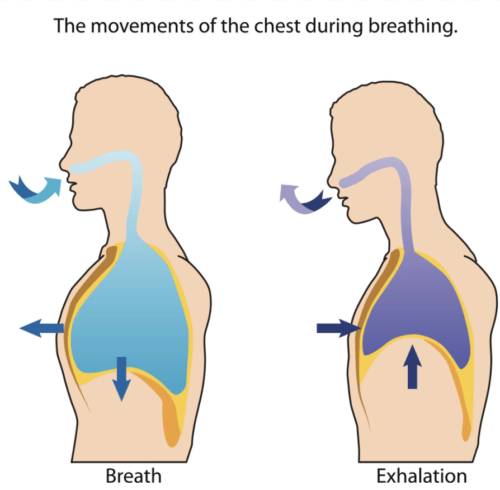
If you look at the diagram above, you can see that the arrow goes down during the inhalation process, which is the direction that the diaphragm muscle is going.
You’ll also notice that this area begins to flatten out, because the diaphragm muscle activates during inhalation as to allow air to fill the lungs. If it does not move down, the upper chest has to rise in order to accommodate the influx of oxygen.
During exhalation, the diaphragm goes up and forms a dome as the abdominal muscles contract, which is ideal.
SO WHAT IS OPTIMAL BREATHING?
Optimal breathing basically comes down to having a good balance between the inhalation and exhalation musculature, as well as between the abdomen and diaphragm. The other essential element is correct belly breathing, which involves adequate lateral expansion that moves the ribs as needed to allow enough air flow.
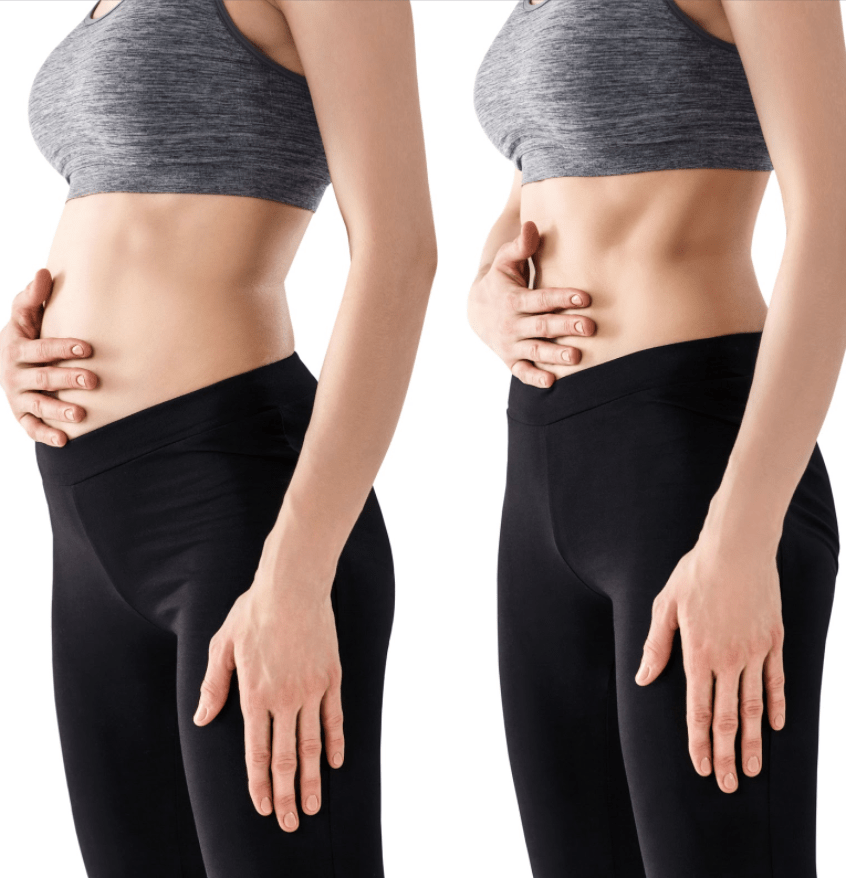
The four images below depict different contractions of the abdominal muscles.
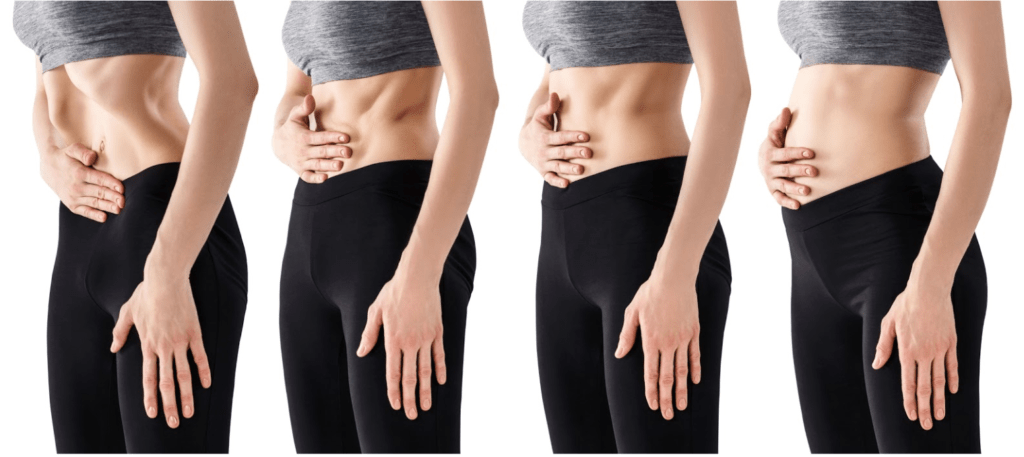
1: This picture shows the action of drawing in the transverse abdominus; the deepest abdominal muscle and the one responsible for sucking the stomach up and in. This movement is not ideal during inhalation as this part of the breathing cycle requires the diaphragm to go down.
2: This image shows a fairly rigid contraction of the larger abdominal muscles. If you tighten your abs super hard and then try to breathe, you’ll notice that it’s very difficult. In other words, you won’t be able to expand your abdomen enough to allow proper air flow, forcing you to move the breath up to the chest region in order to fulfill your oxygen requirement. (Note that this doesn’t mean you can’t train your core muscles, just that you need to strike a balance between the superficial and deep abdominal muscles.)
3: This photo shows a more ideal position, as it involves a normal amount of tension in the abdominal muscles – not too tense, but not too relaxed either.
4: The final image shows the abdominals in a very relaxed position, which is clear from the forward tilt in the pelvis. This over-relaxation of the abdomen is often seen in people with bloating due to digestive issues, causing them to belly breathe constantly as a result, or a great degree of muscular imbalance in the pelvic region.
CONTRIBUTING FACTORS TO BREATHING IMBALANCES
- Emotional Stress – phobias, anxiety, and other emotional disorders can be exacerbated by incorrect breathing patterns, but they can also be root factors that contribute to respiratory imbalances in the first place.
- Nutritional Issues – things like digestive problems, inflammation-provoking dietary habits and food allergies can absolutely contribute to disrupting the breathing cycle.
- Environmental Allergies – any kind of allergy can be a cause of breathing stress.
- Underlying Pathology – whether present in the lungs, the immune system, or the nervous system, an underlying pathology can be a contributor to respiratory stress and thus breathing pattern imbalances that can be difficult to correct.
INTEGRATION IS KEY
The key to solving imbalances is integration. Reducing stressors as those mentioned above is extremely helpful to speed up this process and reduces the reliance on any one approach. Attacking the problem from several different sides of the spectrum is the best way to ensure success with improving your breathing, and in extension, restore posture and movement based imbalances.
A good plan includes several different approaches, such as:
- Restoring flexibility to the muscles of the upper body
- Restoring mobility to the spine and rib cage
- Restoring function and relieving chronic tension in the diaphragm, pelvic floor, and deep abdominal wall
- Education on proper breathing and daily exercises
- Education on emotional stress and noticing when it’s time to engage in relaxation methods
- Dietary intervention
RECAP
Let’s take a moment and go over the key points of this article.
- Faulty breathing includes chest breathing, paradoxical breathing and belly breathing alone.
- Optimal breathing involves belly breathing with lateral expansion and a balance between the abdominals and the diaphragm as well as inhalation and exhalation.
- Integration is key, which means you need to address any possible causes such as postural imbalances, underlying health concerns, allergies etc.to solve the problem with breathing related issues.