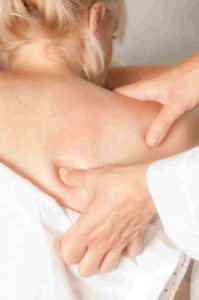
 Receiving a massage is comforting and relaxing. It is therapeutic after a long day at work. Moreover, it is a pleasing experience if you have muscle cramps or any type of musculoskeletal problem. Massage stimulates the blood flow and the lymphatic return while modulating the nervous system at different levels.
We should also highlight the psychological effects of massage therapy. There are different ways massage therapy can benefit mental health. Nervous system modulation during a massage session influences higher brain functions, and various massage techniques can change our mood and mental state.
In this article, we’re going through the main mechanisms and what to expect emotionally after a massage therapy session.
Does massage help with stress and anxiety?
In different ways, massages can benefit mental health and multiple brain parameters. They mainly reduce the sensation of stress and anxiety. That is probably the first thing you feel after a few minutes at a massage table. Shortly after the massage has started, you become aware of the tense muscles in your body and feel prompted to release them.
Massage strokes help release the muscle tension, and it feels great. It only takes a few minutes after relaxing your muscles until you start feeling stress going away. Anxious thoughts leave you for a while, and you start truly enjoying the moment.
So, does a massage helps with stress and anxiety? It depends on the type of massage. If you receive a relaxing massage, it will definitely make a difference in your anxiety levels. Students and people who lead a stressful life can experience the benefits first hand (1,2).
How does massage help with stress?
There are multiple benefits of massage for stress. All of these will reduce your stress levels (3):
- Massage reduces muscle tension. By doing so, your body feels relaxed and calm.
- After a few minutes, you start feeling more self-aware. Focusing on the hands on your skin reduces anxious thoughts while enjoying the experience.
- Massage therapy features a reduction of muscle aches and pain. The emotional response to pain can be a source of stress and is now gone.
- After some time, you feel so relaxed that stress transforms into drowsiness. In some cases, very stressed people are the first ones to fall asleep during a session.
- All of the changes listed above trigger a reduction of stress hormones. Lower levels of cortisol will also reduce your emotional and physical tension.
How does massage promote relaxation and reduce stress and anxiety?
Everyone knows that massage therapy can help when you’re feeling stressed or tight, but let’s dive deeper into the topic and understand what happens in your body when you receive a massage. What is changing, and why is it reducing your stress and anxiety levels?
Muscle tension is one of many responses of the autonomic nervous system to prepare you for a fight. It is a fight-or-flight response triggered by the sympathetic nervous system, which also acts on your brain, causing anxious thoughts. Essentially, when your muscles are tense, the chances are that your brain is also firing a fight-or-flight impulse. An overload of neurotransmitters causes excessive stimulation, nervousness, and agitation. This translates into what we associate as stress and anxiety (4).
Relieving muscle tension also has an effect on the brain and the rest of the nervous system. It activates the parasympathetic nervous system and induces relaxation and emotional calmness.
The mechanism is not yet understood but apparently it has a physiological and cognitive component. In other words, your body automatically triggers inhibitory neurotransmitters to calm down your brain in response to decreasing muscle tension. Your conscious mind also contributes and tells your brain that it is time to relax, enjoy the experience, and stop worrying about the past and the future (4,5).
What type of massage is best for depression?
The emotional benefits of massage therapy include changes in your mood and a reduction of depressive symptoms. Several authors have reported encouraging results in different types of massage and mental health research.
There is so much evidence in the field that many authors have gathered data from different sources to merge them into a meta-analysis. According to evidence, as little as one massage therapy session reduces anxiety in individuals, but it takes a bit more time and multiple sessions to reduce depressive symptoms. The effect is similar to psychotherapy and works even better when a psychotherapist is involved (6).
But there are different types of massage. What type should you request if you want to focus on the emotional benefits?
Most types of massage bring about these benefits, especially whole-body massage, soft tissue massage, and specific techniques such as:
- Swedish massage
- Deep tissue massage
- Neuromuscular therapy massage
- Myofascial release
You could ask your massage therapist for aromatherapy, too. Interestingly, this field is in early research, and there’s still much to learn about it. However, everything seems to point out that essential oils contribute by soothing your mind, reducing anxiety, and calming down depression (7). The best essential oils to boost the emotional benefits of massage therapy include:
- Chamomile
- Grapefruit
- Jasmine
- Sweet orange
- Frankincense
In most cases, anxiety and depression share a common link. Thus, relieving depressive symptoms can be a secondary benefit after anxiety has decreased. That’s why you probably need to wait for a few sessions before massage therapy triggers a lasting effect on your mood. Meanwhile, talk to your therapist about it, and do not hesitate to look for professional help if you still don’t have one.
Conclusion
In this article, we have explored several ways massage therapy can benefit mental health. First off, massage therapy works directly on your muscles, causing a reduction of muscle tension. Such change also triggers the activation of the parasympathetic nervous system, which in turn causes a sensation of relaxation. After a while, you will be enjoying the experience instead of worrying about problems outside of the massage table.
The benefits of massage for mental health extend to the field of depression in some people. If your depressive symptoms are associated with anxiety, there will be a higher chance of improvements.
References
Berggren, S. (2004). Massage in schools reduces stress and anxiety. YC Young Children, 59(5), 67.
Glaser, D. I. (1990). The effects of a massage therapy program on reducing the anxiety of college students (Doctoral dissertation, San Jose State University).
Moraska, A., Pollini, R. A., Boulanger, K., Brooks, M. Z., & Teitlebaum, L. (2010). Physiological adjustments to stress measures following massage therapy: a review of the literature. Evidence-Based Complementary and Alternative Medicine, 7(4), 409-418.
Conrad, A., & Roth, W. T. (2007). Muscle relaxation therapy for anxiety disorders: it works but how?. Journal of anxiety disorders, 21(3), 243-264.
Goral, K. E. (2011). The Effects of Massage Therapy on Autonomic Nervous System Activity, Anxiety, and Stature in Anxious Individuals. (Doctoral dissertation, University of Wisconsin-Stout).
Posadzki, P., & Parekh-Bhurke, S. (2011). Incorporation of massage into psychotherapy: An integrative and conjoint approach. Chinese journal of integrative medicine, 17(2), 154-158.
Lee, J. R., & Hong, H. S. (2005). Effects of aromatherapy and foot reflex massage on stress, depression, and sleep pattern of the institutionalized elderly. Journal of Korean Biological Nursing Science, 7(2), 17-30.
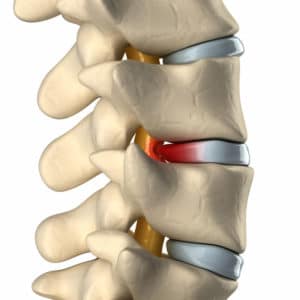 Chronic pain that may have a structural component such as a herniated disc can be continuous or intermittent. Either way, it is very uncomfortable and usually worsens by standing for an extended period or moving the spine.
Worse still, imaging studies are often vague and inaccurate to predict the outcome (1). Thus, most people need to try several therapies before they can find significant relief.
Doctors often recommend physical therapy for herniated disc pain, but will a massage help a bulging disc? Several people have had an excellent experience, while others prefer medical treatment. In some cases, only surgery provides successful relief (2).
In this article, we’re covering this topic thoroughly, and you will know what to expect from a massage for herniated disc in lower back pain.
Is it OK to get a massage with a herniated disc?
Massage sessions can be prescribed as a part of physical therapy for herniated disc pain. There is nothing wrong with it as long as it is performed by a licensed massage therapist. Massage for herniated discs is not a superficial type of massage. Certain therapies require traction and specific movements to achieve a certain degree of improvement. Thus, it is not meant to be performed outside of the therapist’s office (3).
Massage therapy can really help if you experience these symptoms:
- Stiffness in your spine and continuous pain
- Avoidance behaviors trying to prevent pain
- Depression, anxiety, or stress due to your condition
- Worsening sleep quality caused by your herniated disc
We usually hear about herniated discs in the lower back, but that’s not the only painful area to consider. Sometimes, chronic neck pain can be caused by a herniated cervical disc as well.
Massage for herniated disc in neck pain may improve the condition and provide temporary but significant relief. Techniques used are different than the lumbar region, but it should also be performed by a licensed therapist for safety and better results.
How do you massage a herniated disc?
There are several types of massage for herniated disc pain. Additional physical therapy techniques are often employed as well, including joint mobilization or pumping manual therapy techniques.
The most common massage techniques to improve symptoms of a herniated disc include (3, 4):
- Deep tissue massage: This is probably the most effective type of massage for herniated discs. As the name implies, the therapist will use a progressively deeper pressure on your back to reach the spine, relieve tension, and reduce muscle tension.
- Traction movements: This is an advanced technique only performed by skilled hands. It is meant to release the nerve roots pressed by the bulging or herniated disc. The therapist will use a combination of pulling movements to gently decompress your spine and improve your symptoms.
- Hot and cold massage therapy: Your therapist may alternate deep tissue massage and traction movements with hot and cold therapy for better results. This type of therapy alternates between high and low temperatures to increase the blood flow to the trouble area.
Does massage therapy help bulging disc?
If OTC anti-inflammatories only provide partial relief, will a massage help a bulging disc?
We should make clear that the only way to “fix” a herniated disc is through surgical treatment. However, massage therapy provides significant improvements. They are usually temporary improvements and mainly work in patients with symptoms aggravated by biopsychosocial elements (stress, anxiety, pain avoidance behaviors, or an emotional response to pain) (5).
As mentioned above, imaging studies are often elusive. People with no apparent structural problems could sometimes experience worse symptoms than people with them.
Research suggests that discs may bulge and reabsorb in nearly 70% of cases, and pain in such circumstances can be challenging to trace back to a single cause (6). There is clearly much more going on than just a bulging disc.
Massage as physical therapy for herniated disc pain manages those extra components that influence chronic back pain. As such, it won’t be a definite improvement in many cases but may help cope with the symptoms, improving the quality of life through a nonsurgical alternative.
What is the fastest way to heal a herniated disc?
Massage for herniated disc in lower back pain is only one measure we can take, but it isn’t always the fastest way to improve pain. It usually takes several massage sessions to experience significant relief.
In the meantime, you can use other therapies, and each has its own benefits (7):
- Medications: In some cases they can be an important component if pain is significant. As mentioned before they won’t “fix” the problem, but you will experience improvements in your quality of life. It is a short-term measure for herniated discs.
- Muscle strengthening and core stabilizing exercises: Stronger back and core muscles will support the spine and relieve compensation.
- Epidural injections: Instead of using oral pain relievers, the next step, if recommended by your physician, may be trying epidural injections. They are administered directly on your spine and can potentially provide relatively rapid pain relief. They also reduce inflammation levels but won’t change the structure of the spine.
- Surgical treatment: Conservative treatment in severe cases may not be enough to resolve herniated disc pain. At this point, it would be a through discussion with your doctor and surgeon.
Does a herniated disc ever fully heal?
Not everyone requires surgery or spinal injections to improve their symptoms. In many cases, people will have a significant improvement with conservative therapy.
It’s important also to remember that surgical treatment is not a long-term guarantee, and some people start experiencing low back pain symptoms once again years after treatment (8).
So in summary when asking the question can massage therapy help with herniated discs, dealing with discs can be challenging, but throughout the process, physical therapy for herniated disc pain, including massage therapy, stabilizing exercises, core strengthening, and other strategies can speed up the process and make you feel better.
References:
- Kim, J. H., van Rijn, R. M., van Tulder, M. W., Koes, B. W., de Boer, M. R., Ginai, A. Z., … & Verhagen, A. P. (2018). Diagnostic accuracy of diagnostic imaging for lumbar disc herniation in adults with low back pain or sciatica is unknown; a systematic review. Chiropractic & manual therapies, 26(1), 1-14.
- Gregory, D. S., Seto, C. K., Wortley, G. C., & Shugart, C. M. (2008). Acute lumbar disk pain: navigating evaluation and treatment choices. American family physician, 78(7), 835-842.
- Lü, L. J., Ke, X. A., Mao, X. D., Chen, X. J., Wu, F. C., & Tong, H. J. (2010). Clinical observation of post-extension pulling massage in treating lumbar disc herniation. Zhongguo gu shang= China journal of orthopaedics and traumatology, 23(10), 790-791.
- Xiaohua, L. (2013). Therapeutic Effect of Traction and Manual Massage for Lumbar Disc Herniation. Chinese Medicine Modern Distance Education of China, 15.
- Hunt, E. R., Baez, S. E., Olson, A. D., Butterfield, T. A., & Dupont-Versteegden, E. (2019). Using massage to combat fear-avoidance and the pain tension cycle. International Journal of Athletic Therapy and Training, 24(5), 198-201.
- Ming Zhong, M. D., & Liu, J. T. (2017). Incidence of spontaneous resorption of lumbar disc herniation: a meta-analysis. Pain physician, 20, E45-E52.
- Hahne, A. J., Ford, J. J., & McMeeken, J. M. (2010). Conservative management of lumbar disc herniation with associated radiculopathy: a systematic review. Spine, 35(11), E488-E504.
- Clark, R., Weber, R. P., & Kahwati, L. (2020). Surgical management of lumbar radiculopathy: a systematic review. Journal of general internal medicine, 35(3), 855-864.
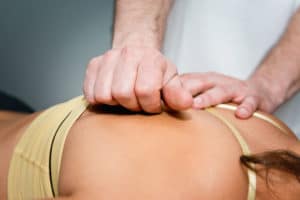 Massage therapy is one of the earliest home remedies available through the years. It is a popular solution for body aches, particularly those in the back. However, it is much more than a pain-relieving technique. You can find additional benefits of a full body massage depending on your ailment and its symptoms.
That’s why in this article, we’re covering essential questions, including what is massage therapy, why get a massage, and a comprehensive list of full body massage benefits.
After reading this piece, you will know when massage therapy is appropriate. You will also understand the most common indications.
What is massage therapy?
Since 1600 BC, people knew what is massage therapy and its applications. It was popular in the Chinese culture, the Greek world, and the Turkish people of that time. It consists of manipulating the body using the hands and different maneuvers depending on what you need.
Massage triggers body relaxation and has been used to relieve pain and heal injuries. It is now an essential part of complementary and alternative medicine. As such, it should be performed by a therapist for better results. When done right, massage therapy improves the cardiovascular system, reduces stress levels, and has different benefits, as discussed ahead (1).
What do you wear for a full body massage?
People could feel a bit anxious around full body massages if they don’t know how it’s done. Some may believe that complete nudity is a must for a full body massage, but that is false.
You can wear comfortable underwear or athletic sports wear (sports bra and shorts for example) during full body massages. Moreover, you may also be covered by different layers of sheets or towels. Your massage therapist will work around the covers as he manipulates different parts of your body to avoid making you feel exposed.
What does a full body massage do for you?
Full body massages are nowadays popular ways to relieve stress. They make you feel relaxed and more comfortable. You might feel tense at the beginning of the massage session. But then, you stop thinking about the load of work and the daily stress. Your muscles relax, your heartbeat slows down, and you start feeling calm (1).
Some studies have even evaluated the effects of massage therapy on depression. Researchers say that the benefits of body massage can influence your mood. Thus, body massages can do a lot for depressed people after a difficult day (2).
What does a full body massage do for your body?
A full body massage benefits people with musculoskeletal disease and chronic pain. In their bodies, this complementary therapy triggers several changes. They include:
- Relaxation of muscle tension and perceived pain sensation
- An increase in immune function, mainly through natural killer cell activity
- Reduction of heart rate and improvements in the EEG
- Decreased levels of stress hormone (cortisol) in the body
- Changes in brain centers such as the hypothalamus and the amygdala. These centers are useful to regulate emotion.
What are the benefits of massage?
Why get a massage? The answer is clear if you have muscle pain. But the applications of massage therapy go far beyond. This is a comprehensive list of full body massage benefits you can experience by yourself:
- It is an excellent way to relieve stress and reduce anxiety levels (2)
- It provides short-term relief of low back pain (3)
- Massage reduces muscle tension and promotes exercise performance in athletes (4)
- After a massage session, you will probably sleep more comfortably (5)
- It is an excellent aid to treat depression symptoms (2)
- Massage therapy slows down the heart rate, lowers the blood pressure, and improves cardiovascular function (1)
- It triggers an increase in blood flow and improves circulation (1)
- Massage sessions can be helpful if you have chronic neck pain or tension headaches (6)
- People with a muscle injury may increase their range of motion through massage therapy (7)
- It helps cancer patients with chemotherapy-induced nausea (8)
- It can be used in osteoarthritis or rheumatoid arthritis to cope with the symptoms (9)
- In older adults, massage therapy may improve balance and reduce dementia behavioral symptoms (10,11)
- It may help you with fibromyalgia symptoms and other diseases that are otherwise difficult to treat (12)
- When done right, massage therapy may reduce the symptoms of carpal tunnel syndrome (13)
How often should you get a full body massage?
Some benefits of body massage can be experienced immediately after the session. Most patients feel calmer and relaxed, reduce their stress levels, and improve their sleep quality right away. So, depending on your symptoms, the benefits can be instantaneous.
However, therapists usually recommend massage therapy for several weeks in other cases. If you’re trying massage therapy to deal with chronic pain issues, depressive symptoms, or improving balance in older adults, the time it takes to see the benefit should be extended to a minimum of 5 weeks.
Most studies cited above gave participants massage therapy sessions twice or three times a week for five and sometimes eight weeks before evaluating the results. Thus, the usual recommendation is to keep receiving this type of therapy for around two months to get the entire benefits of a full body massage.
Conclusion
After understanding what is massage therapy and reviewing the list of full body massage benefits, you’re ready to apply this knowledge.
Will massage therapy work for you? It depends on what ailment you have. If your problem is related to the musculoskeletal system, massage therapy will probably work. In some cases, it deals with the pain; in others, it helps you regain your range of motion.
Sometimes massage therapy helps to reduce stress levels, which may heighten or induce pain symptoms. It also works against depression symptoms and may help you get asleep.
There is also a difference between short-term benefits and long-term benefits. Patients feel more relaxed and may sleep better in the short term. Back pain improvements are often short-term as well. But if you want to cope with chronic pain and deal with more serious ailments, you might need more sessions to start experiencing the benefits of a full body massage.
Learn more about our massage services in Temecula CA
References:
- Field, T. (2014). Massage therapy research review. Complementary therapies in clinical practice, 20(4), 224-229.
- Hou, W. H., Chiang, P. T., Hsu, T. Y., Chiu, S. Y., & Yen, Y. C. (2010). Treatment effects of massage therapy in depressed people: a meta-analysis. The Journal of clinical psychiatry, 71(7), 0-0.
- Furlan, A. D., Giraldo, M., Baskwill, A., Irvin, E., & Imamura, M. (2015). Massage for low‐back pain. Cochrane database of systematic reviews, (9).
- Nunes, G. S., Bender, P. U., de Menezes, F. S., Yamashitafuji, I., Vargas, V. Z., & Wageck, B. (2016). Massage therapy decreases pain and perceived fatigue after long-distance Ironman triathlon: a randomised trial. Journal of physiotherapy, 62(2), 83-87.
- Field, T., Hernandez-Reif, M., Diego, M., & Fraser, M. (2007). Lower back pain and sleep disturbance are reduced following massage therapy. Journal of bodywork and movement therapies, 11(2), 141-145.
- Cheng, Y. H., & Huang, G. C. (2014). Efficacy of massage therapy on pain and dysfunction in patients with neck pain: a systematic review and meta-analysis. Evidence-Based Complementary and Alternative Medicine, 2014.
- Field, T., Diego, M., Gonzalez, G., & Funk, C. G. (2014). Neck arthritis pain is reduced and range of motion is increased by massage therapy. Complementary therapies in clinical practice, 20(4), 219-223.
- Mazlum, S., Chaharsoughi, N. T., Banihashem, A., & Vashani, H. B. (2013). The effect of massage therapy on chemotherapy-induced nausea and vomiting in pediatric cancer. Iranian journal of nursing and midwifery research, 18(4), 280.
- Nelson, N. L., & Churilla, J. R. (2017). Massage therapy for pain and function in patients with arthritis: a systematic review of randomized controlled trials. American journal of physical medicine & rehabilitation, 96(9), 665-672.
- Sefton, J. M., Yarar, C., & Berry, J. W. (2012). Six weeks of massage therapy produces changes in balance, neurological and cardiovascular measures in older persons. International journal of therapeutic massage & bodywork, 5(3), 28.
- Margenfeld, F., Klocke, C., & Joos, S. (2019). Manual massage for persons living with dementia: A systematic review and meta-analysis. International journal of nursing studies, 96, 132-142.
- Li, Y. H., Wang, F. Y., Feng, C. Q., Yang, X. F., & Sun, Y. H. (2014). Massage therapy for fibromyalgia: a systematic review and meta-analysis of randomized controlled trials. PloS one, 9(2), e89304.
- Elliott, R., & Burkett, B. (2013). Massage therapy as an effective treatment for carpal tunnel syndrome. Journal of bodywork and movement therapies, 17(3), 332-338.
The Top 8 Techniques For Piriformis Release
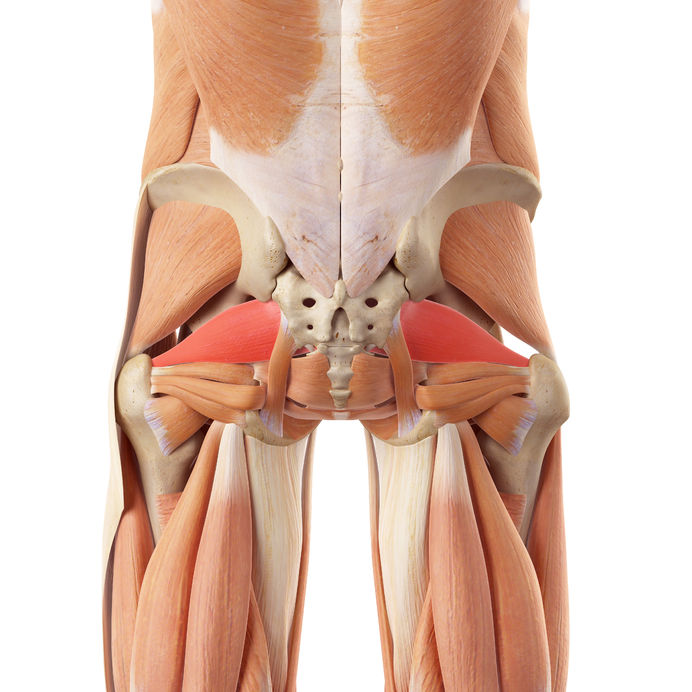
The piriformis muscle (included with 5 other muscles) is an external rotator of the hip. It connects the sacrum to the femur bone (thigh) and is often associated with a variety of lower back, sacroiliac, and hip issues.
If during an assessment excessive posterior pelvic tilt, sacroiliac joint region pain, sciatica-type symptoms, IT band issues, or flexibility issues of the hip are found, piriformis massage may be indicated.
How to know if you need to release your piriformis:
- Lower back pain
- Sacroiliac joint pain
- Sciatica
- Hip pain
- Posterior pelvic tilt
- Pelvic pain
- Piriformis syndrome
Piriformis Muscle Anatomy And Function
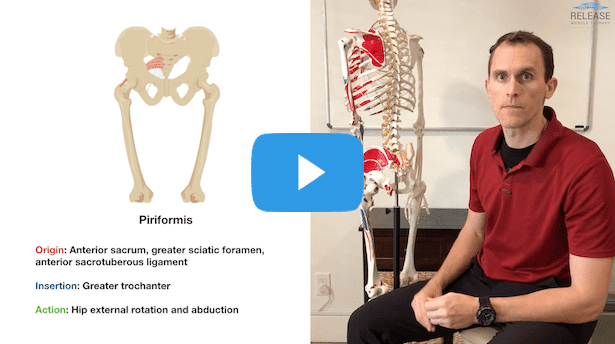
Origin: Anterior surface of the sacrum
Insertion: Greater trochanter of the femur
Function/s: Hip external rotation, abduction, and extension
Functional action: Decelerate internal hip rotation, adduction, and flexion
Innervation: Sciatic nerve
Piriformis Trigger Points
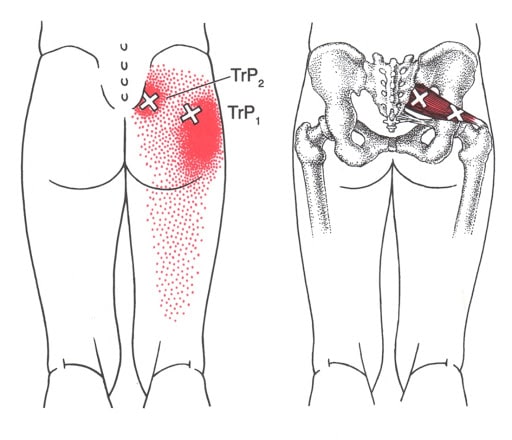
Piriformis trigger points are very common and relatively easy to locate. These sensitive points are capable of referring pain down the backside of the leg. Due to this phenomenon, trigger point activity may be mistaken for symptoms of sciatica.
It is important to note, the concept of trigger points and their relationship to pain is a point of high debate. Regardless, it appears helpful to address these sensitive areas with trigger point piriformis release techniques, at least for temporary relief.
Specifically, piriformis trigger point release can be attained by using simple neuromuscular techniques such as positional release technique, ischemic compression, or muscle energy techniques.
Top Tips For Dealing With Piriformis Pain
-
Avoid crossing your legs and generally sitting with your knees too close together -
Avoid excessive aggressive stretching of the piriformis -
Intense strength training exercises that fatigue the already painful and sensitive tissues -
Emphasize placing the affected side leg into external rotation to allow the muscle to passively shorten and relax (see below) -
Use a cane or walking sticks temporarily to assist if painful to walk -
Use passive therapies such as heat or ice, pain relief creams, or TENS to calm down nerves and promote circulation -
Strengthen the other gluteal muscles and reduce over-activity of antagonist muscles
Best Reviewed Foam Cushion For Piriformis Relief
#1 Piriformis Relief Position
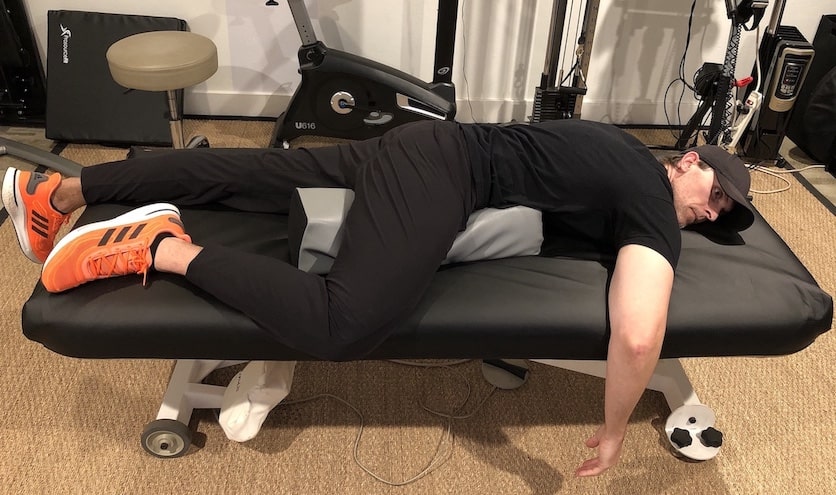
When piriformis pain is just too aggravated and sensitive to stretch or exercise, sometimes the best thing to do is simply get into a position of relief.
One of the best ways to do this is by laying face down and placing the affected leg out to the side. This position allows the piriformis muscle to shorten, which can help relieve tension and allow it to calm down.
A small pillow can be placed under the hip to reduce lower back discomfort and allow a better position of rest. Usually 3-5 minutes is sufficient to allow a reduction in excess muscle tone, but it can be done for much longer if desired.
Left vs Right Side Piriformis Pain
#2 Piriformis Muscle Massage Therapy
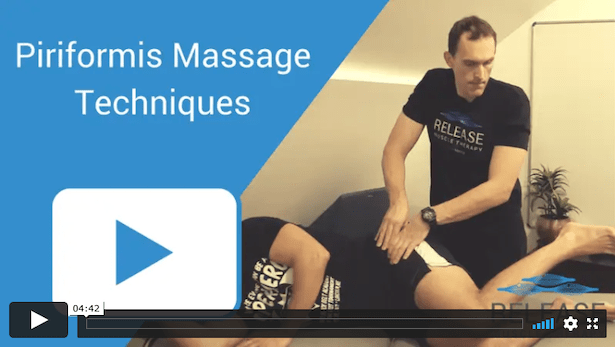
The piriformis muscle lies under the larger, more superficial glute muscles, so it can be challenging to directly reach with deep tissue massage work until those layers are relaxed.
This muscle is responsive to more gentle approaches, and does not need overly aggressive pressure to get results. Piriformis muscle massage is effective even with simple glides with thumbs or the elbow.
The fibers of this muscle connect to the anterior (front) surface of the sacrum bone, so they can challenging to fully address, which is why a combination of deep tissue massage for the piriformis and stretching work is often indicated for best results.
Piriformis Syndrome Massage Notes + Caution
Massage is often indicated for piriformis syndrome, and it can indeed be helpful, but I highly recommend it is done with low pressure.
Since the muscle is already aggravated, excessive intensity when treating this muscle can further increase sensitivity, pain, and guarding.
Piriformis syndrome massage requires a gentle, graded exposure approach in order to achieve the goal of restoring normal health and function to the area.
Since the intensity is generally low, it may be necessary to follow up with exercises and stretches to the get the piriformis muscle release to “stick” after the therapy session.
#3 Stretches For Piriformis – Version 1
The piriformis is an external rotator of the hip, but because of its location and hip mechanics, there are 2 different approaches to stretching the muscle. In this first version, the emphasis is on adduction and hip flexion, which allows for release of the more superficial muscles and some of the external hip rotators.
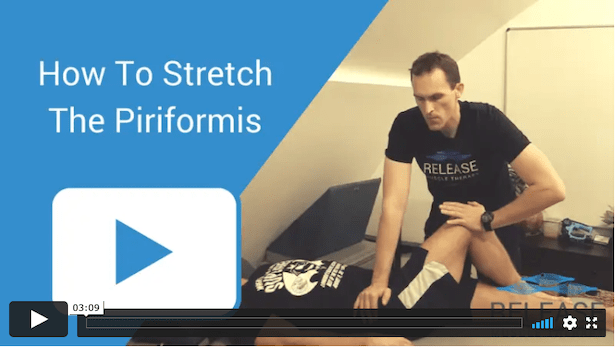
#4 Stretches For Piriformis – Version 2
This second stretch version can directly hit the piriformis and is generally performed AFTER the first variation. A combination of varying hip positions with external rotation will get most of the deep hip muscles stretched.
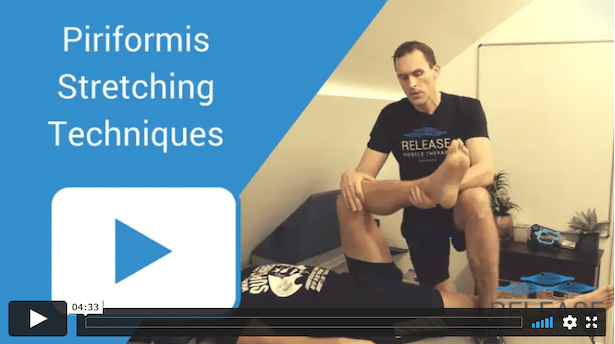
#5 Piriformis Release – Post Isometric Relaxation
Post-isometric relaxation works very well for the hip muscles. Be sure to contract at a low intensity for 8-10 seconds prior to relaxing fully into the new stretch position for another 8-10 seconds.
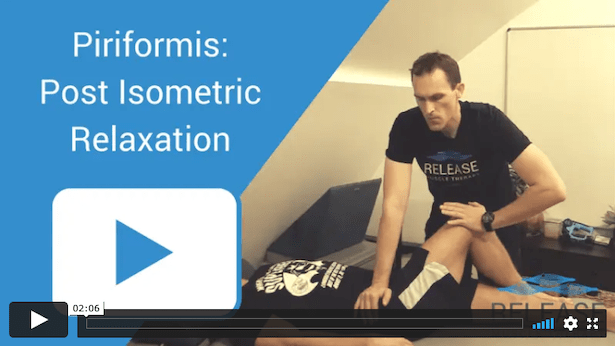
#6 Piriformis Release – Reciprocal Inhibition
Reciprocal inhibition technique is a very powerful release technique for the piriformis and other external hip rotators because the groin (especially on the left!) is often inhibited and needs to be strengthened.
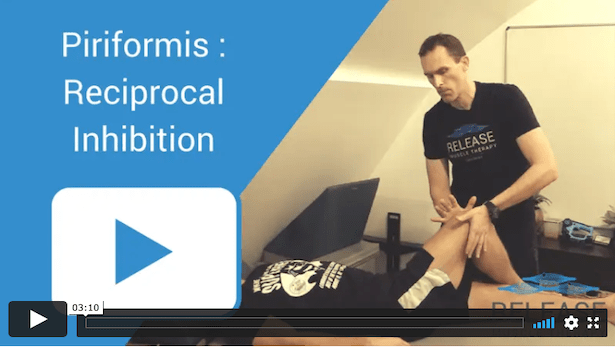
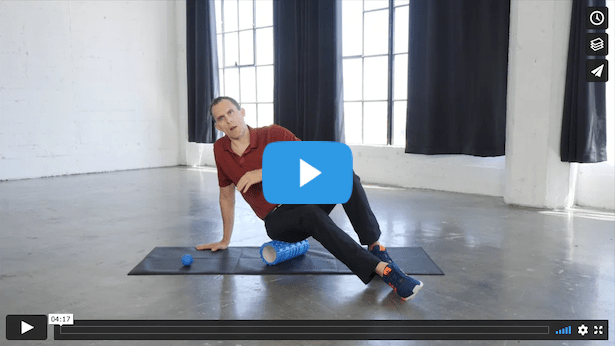
#7 Piriformis Self Massage with Foam Roll
You can also perform self myofascial release by foam rolling the piriformis, using a lacrosse ball, or a softball.
Any of these tools can be effective, and one may be preferred over the other depending on how sensitive the area is. The foam roller provides a soft surface, and the wider contact area makes it the most tolerable tool to start with.
Using a softball or lacrosse ball for piriformis release massage can be quite uncomfortable due to the more weight you will putting into the area per square inch. This will result in an inability to relax fully against the pressure, trigger guarding, and reduce the effectiveness of the therapy.
This is especially important to consider when self release techniques are included with piriformis syndrome treatment. Gentle, progressive techniques may be preferred in order to avoid aggravating the condition.
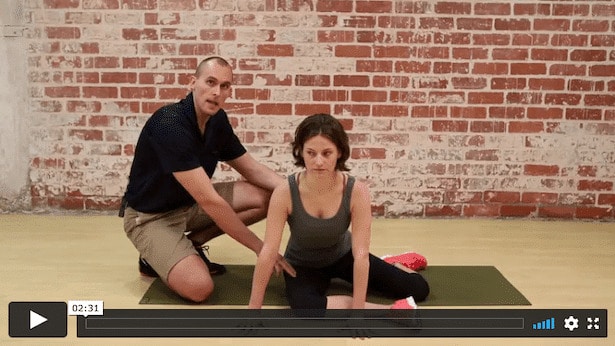
#8 Self Piriformis Stretch – The 90-90
The 90-90 stretch is an excellent self piriformis release and variation of the more advanced stretch listed above.
Need help fixing piriformis issues? Click below and lets talk.
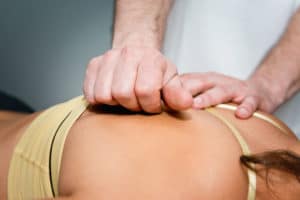 Trauma is a common cause of back pain, and it can be very severe. The first idea that comes to mind to relieve back pain is a relaxing massage. But is it a good idea to massage an injury? Can you benefit from massage therapy after car accident or a similar type of trauma?
In this article, we’re reviewing the topic and considering the evidence for reasons to get massage therapy after car accident to give you an answer based on what the science says.
How does massage promote healing?
When the body talks, it is sometimes wise to listen carefully. The urge for a massage after trauma responds to specific physiologic responses after rubbing your skin. Reviewing these effects in the context of back massage, Donna Gauthier, MSN, explained that massage has these benefits (1):
- It promotes relaxation, rest, and sleep quality, all fundamental for healing
- Massage therapy balances blood pressure levels and other hemodynamic issues
- Skin temperature increases as a sign of blood circulation improvements. This is essential to provide nutrients and oxygen to the healing tissues.
A more recent study published in the British Journal of Sports Medicine evaluated the role of massage after sports-related injuries (2). The researchers mention that muscles perceive massage and respond by sending chemical signals. They work together to reduce muscle tension, spasms, and swelling. Joint flexibility increases, and the healing process accelerates through modulation of inflammation, stem cell activity, and a substance called Vascular Endothelial Growth Factor (VEGF).
The basic principle is similar in a massage after car accident. However, we should be careful. Not every massage is appropriate after enduring severe trauma.
Is it okay to massage an injury?
Massage accelerates healing, but is it okay to massage an injury? Can you ask your relatives for a massage after car accident? In short, only a professional should massage an injury. Otherwise, you could cause more harm than good.
A massage therapist would evaluate your injury and give you a massage accordingly. There are many types and different degrees of depth, and you need one of them to recover. Thus, if you want to get a massage after car accident, finding a licensed massage therapist for the task is a better option.
Should I get a massage after a car accident?
Only a licensed therapist should give you a massage after car accident trauma (Once it is approved by a licensed physician!). If you receive this type of therapy, it will have several benefits (2, 3):
- It is an effective and drug-free healing tool
- It reduces pain and promotes better sleep
- Massaging the trouble area promotes blood circulation and nutrient exchange
- When properly done, it also wipes away swelling and liquid accumulation
- Massage therapy modulates inflammation and prevents muscle spasms
- It activates VEGF activity and stem cells, as described above
Should you get a massage if you have whiplash?
It can be a great idea to get massage therapy after car accident trauma. But what about whiplash? This is not a concussion and does not behave like a back muscle issue. It is a neck injury caused by jerking movements of your head during a car crash. This causes a sudden force that tears tendons and muscles in the neck, causing severe limitation and pain.
Massage therapy is an excellent way to get significant improvements in neck pain (4). Moreover, whiplash massage was found beneficial in patients with grade II injuries. It works even better when combined with active physical therapy (5). They won’t increase the range of movement right away, but they are effective measures to reduce pain.
Massage therapy after car accident: The technique matters
Whether it is a whiplash massage or a traditional back pain massage, the technique is always an important aspect. Depending on the type of lesion and its extension, your therapist may favor certain parts and avoid massaging others. A variety of massage techniques can be applied depending on what you need:
- Deep muscle therapy massage: Mainly used in chronic pain. The injury should be in an advanced stage of healing before trying a deep massage.
- Swedish massage: This gentle technique promotes blood flow and reduces anxiety levels. It is an excellent starting point to detect tenderness and proceed with other methods.
- Neuromuscular therapy massage: Your therapist may recommend this type if you suffered from whiplash. It involves specific techniques for your neck and head and is often used to reduce headache and neck pain.
Massage therapy after car accident injuries decreases pain and improves your recovery when done right. Thus, do not ask anyone to give you a massage after car accident trauma. Look for a professional instead, and always get the approval from your doctor before pursuing it!
There are some great reasons to get massage therapy after car accident, however, being informed and ruling out any potential underlying medical issues is first and foremost.
References
- Gauthier, D. M. (1999). The healing potential of back massage. Worldviews on Evidence‐based Nursing presents the archives of Online Journal of Knowledge Synthesis for Nursing, 6(1), 75-80.
- Best, T. M., Gharaibeh, B., & Huard, J. (2013). Stem cells, angiogenesis, and muscle healing: a potential role in massage therapies?. British journal of sports medicine, 47(9), 556-560.
- Airosa, F., Arman, M., Sundberg, T., Öhlén, G., & Falkenberg, T. (2016). Caring touch as a bodily anchor for patients after sustaining a motor vehicle accident with minor or no physical injuries-a mixed methods study. BMC complementary and alternative medicine, 16(1), 1-10.
- Sherman, K. J., Cherkin, D. C., Hawkes, R. J., Miglioretti, D. L., & Deyo, R. A. (2009). Randomized trial of therapeutic massage for chronic neck pain. The Clinical journal of pain, 25(3), 233.
- Dehner, C., Elbel, M., Strobel, P., Scheich, M., Schneider, F., Krischak, G., & Kramer, M. (2009). Grade II whiplash injuries to the neck: what is the benefit for patients treated by different physical therapy modalities?. Patient safety in surgery, 3(1), 1-8.
Benefits of neuromuscular massage therapy
There are some very unique benefits of neuromuscular massage therapy that make it a good choice for some people.
First, let’s discover what it is.
What is neuromuscular massage therapy?
Neuromuscular therapy (NMT) is a branch of bodywork that shifts the brain’s perception of pain. The therapist will find sore or sensitive areas in the soft tissues, in particular trigger points, then desensitize these areas with a combination of techniques, such as static compression.
How do you perform neuromuscular therapy?
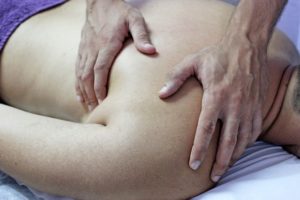 Neuromuscular therapy is not so much a specific technique, but rather a philosophy that includes an assortment of techniques. There are types of NMT, including the European and American versions, and there are important differences between them.
The european system is much broader and emphasizes many more aspects of the therapeutic process, including evaluation, hands on techniques, nutrition, psychological, movement, etc., while in contrast, the American version is much more focused on the massage therapist and trigger point release components specifically.
Trigger points are an interesting topic, and one of considerable debate. At Release Muscle Therapy, I do not particularly focus on trigger points, as they tend to be very common and difficult to specifically correlate to an individual’s pain (for example mimicking the pain), but they do tend to desensitize throughout the natural course of therapy.
At Release Muscle Therapy, I follow the more European model of neuromuscular therapy, in particular because I’m not a more classical massage practice, but instead utilize a variety of techniques to promote optimal health and wellness.
All NMT programs start with a comprehensive evaluation to identify movement restrictions and soft tissue sensitivity. This helps to create a more effective overall strategy, rather than just massaging the areas where the pain is located.
What is the difference between deep tissue massage and neuromuscular massage?
You are probably wondering what neuromuscular massage can do that other massage styles don’t. There are often overlapping elements between many modalities.
Both styles employ massage techniques that can involve deep pressure applied to tissues, but the intention may be very different with other techniques applied.
In neuromuscular massage, classically the focus is identifying the location of trigger points and using techniques such as static pressure and also contract/relax movements to relax muscles that contain active trigger points. Deep tissue massage doesn’t utilize these methods because the intention is different.
How often should you get a neuromuscular massage?
The frequency at which you can get neuromuscular massages depends greatly on the goal of the therapy.
For routine soft-tissue therapy and prevention, it can be done at the same frequency as other types of massage, which is usually based on convenience and financial capability. Once per month or as frequently as once per month is common.
If the outcome of of the therapy is pain relief, this can change the frequency recommendation greatly. Since a comprehensive pain relief program can involve a full-body approach, the frequency of sessions could be 3x per week while focusing on a different area each therapy session.
The intensity of the therapy influences the frequency as well. If the same body region is to be treated, then light applications can be done more frequently, which more days between more intense sessions.
The true benefits of neuromuscular massage therapy are maximized when the work is truly customized to the needs of the individual.
Learn more about neuromuscular massage therapy Temecula.
Did you reach for something and suddenly feel a sharp spasm in the lower part of your back, slightly to the side of the spine? At the bottom of the ribs, and when you breathe in really deep you can feel it?
You might be dealing with the Serratus Posterior Inferior muscle.
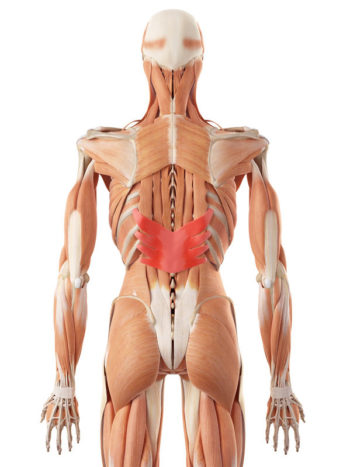
Serratus Posterior Inferior Pain
The serratus posterior inferior usually creates a localized pain pattern. It doesn’t generally refer pain around the ribs or down the back.
Since this muscle is an accessory respiratory muscle (it assists with end stage exhalation of the lower ribs when breathing), repetitive patterns that involve rib movement which breathing may be a trigger for spasm or cramp.
Early in my career I would refer to this as the “swimmer cramp” muscle because it appeared common to swimmers.
Due to its location on the lower ribs, serratus posterior inferior pain can be particularly uncomfortable and finding a position of relief is often challenging.
If you suspect a possible serratus posterior tear (likely due to direct trauma), then be sure to get checked out by your doctor before attempting to do anything with this muscle.
Now that you see where this posterior inferior serratus is located, let’s take a look at a simple positional release technique over a swiss ball.
This muscle is difficult to access because of its location. It is influenced by rib movement, so in order to get it to relax, you’ll have to position your body specifically, then use breathing to move the lower ribs and relieve serratus posterior pain.
The swiss ball side bend works great for the positioning. As shown in the video, you will need to turn your upper body slightly forward to get the stretch into the lower ribs. Breathe deeply to affect the Serratus Posterior Inferior. I often times find this stretch to help, but during acute spasm of the muscle, hands-on massage techniques are necessary to get a full release.
Serratus Posterior Inferior Muscle Massage Therapy
This muscle is quite thin, and trying to self-massage it with a foam roller or tennis ball can be too painful. So, one of the best ways to address tension in the serratus posterior inferior muscle is via massage therapy.
Here is a demonstration:
Serratus Posterior Inferior Muscle – Related Links:
The Top 4 Techniques For TFL and IT Band Release
The tensor fascia lata (TFL) is a muscle located on the front of the hip and merges into the iliotibial band (IT band). It is often associated with a variety of movement pattern imbalances and pain in the lower back, pelvis, hips, and knees.
This muscle should be addressed in all of the above issues.

How to know if you need to address the TFL and IT Band:
- Lower back pain
- Sacroiliac joint pain
- Hip pain
- Excess anterior pelvic tilt
- Knee pain
TFL Muscle Anatomy And Function
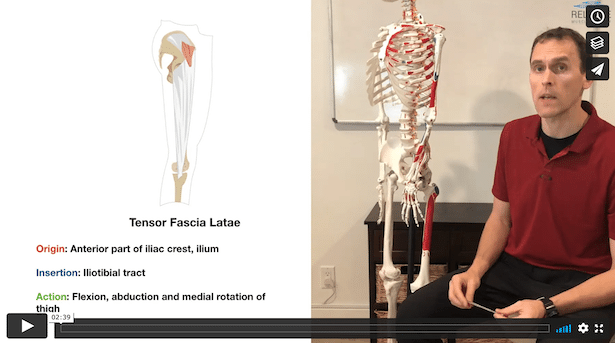
Origin: Anterior part of iliac crest, ilium
Insertion: Iliotibial tract (IT band)
Function/s: Flexion, abduction and medial rotation of the thigh
Functional action: Decelerate external hip rotation, abduction, and extension
Innervation: Superior gluteal nerve, L4, L5, and S1
Most Common IT Band And TFL Questions
How do you release the TFL muscle?
The tensor fascia lata can be released with hands-on massage techniques, self massage techniques (SMFR) such as foam rolling, or with neuromuscular techniques such as muscle energy. In this blog you’ll find demonstration videos for all these options.
What causes tight TFL?
The TFL is a very common compensatory muscle. Its often over-active as an internal hip rotator, especially when the pelvis is positioned in excessive anterior pelvic tilt. When the opposing muscles are weak, this muscle will become dominant and become facilitated. Therefore, a TFL muscle stretch may be warranted.
What does TFL pain feel like?
Pain in the TFL can either be sharp (usually during single leg standing or when lifting your leg in front of you), or a dull ache when walking up or down stairs. If the muscle is short and tight, it can also be a contributor to sacroiliac and/or lower back region pain.
How do you fix overactive TFL?
Reducing the effect of an overactive tensor fascia lata involves two parts:
- Reducing excess muscle tone with TFL release techniques (described later in this article)
- Increasing activity in the muscles that both oppose and synergistically work with the TFL.
While release techniques can provide relatively rapid results including pain relief, exercise work should be the primary focus over the long term. TFL muscles can be effectively stretched as part of a full range of motion exercise strategy as well.
How do you check TFL tightness?
The Ober Test and Thomas Test both reveal reduced range of motion in the hips that is related to TFL and IT band tightness.
Why does the IT band get tight?
Since the IT band is not a contractile tissue, it does not become tight, and thus there is no true IT band release techniques. There are, however, muscles that attach to the band, including the tensor fascia lata (TFL) and the gluteals. In addition, the band lays over a commonly tight muscle, which is the vastus lateralis (a quadricep muscle), which is usually the source of the tenderness which is often felt during IT band massage therapy or foam rolling.
Should you foam roll your IT band?
Foam rolling is a version of IT band self massage, and can be helpful for addressing the muscle that lies beneath the IT band, which is the vastus lateralis. It’s important to understand that releasing the IT band itself is not possible.
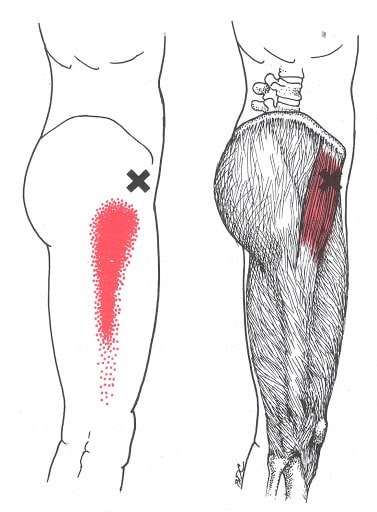
TFL Trigger Points
TFL trigger points are routinely found, and can often refer sensation down the lateral aspect of the thigh. This referred sensation location can be familiar to those dealing with pain in this area.
They are often quite tender, and light to moderate pressure is usually all that is necessary to diminish sensitivity.
Top Tips For Dealing With TFL + IT Band Pain
-
Avoid crossing legs -
Strengthen all glute muscles to opposite TFL -
Professional or self-massage techniques to reduce TFL over-activity -
Re-training exercises to balance hip musculature and reduce TFL dominance
Seated TFL Massage Technique
Addressing the tensor fascia lata muscle in the seated position is an easy way to locate the muscle and get enough leverage to work it.
In this position, the TFL is shortened, which means its not an ideal position to attempt to stretch it, but regardless, it can reduce tissue strain and also allow you to self-treat without too much difficulty.
Word on caution here: Be nice to your thumbs!
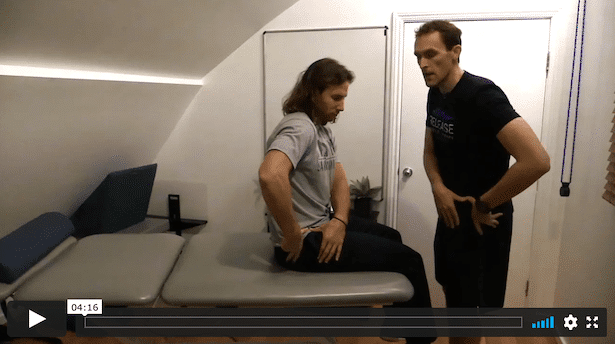
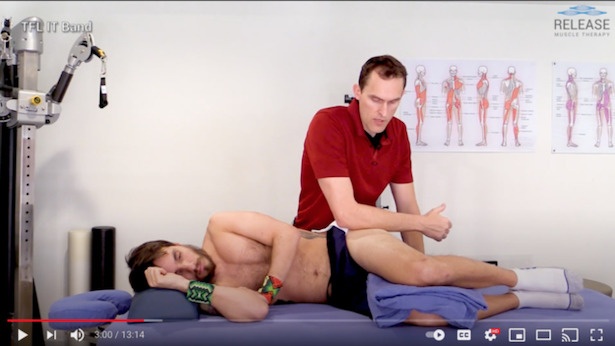
TFL and IT Band Massage
With IT band massage, we are really addressing the lateral quadricep, called the vastus lateralis, which lies under the iliotibial band.
Since the TFL merges into the IT band superiorly, we should address that too in the same massage session.
In the video below, I’ll show you step-by-step how to massage the IT band along with the tensor fascia latae and vastus lateralis.
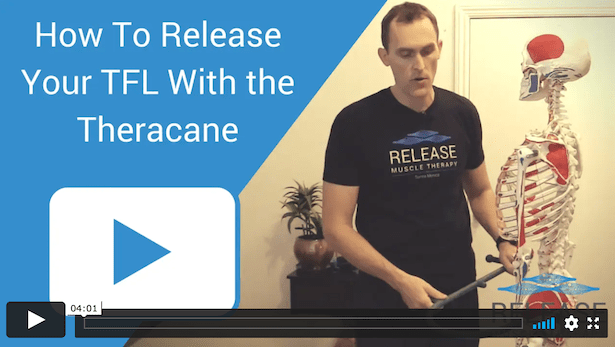
TFL and IT Band Theracane Self-Massage
The Theracane is a great tool for self-treating the TFL in the standing position. The key is proper placement of the tool, as well as shifting your bodyweight to the other leg.
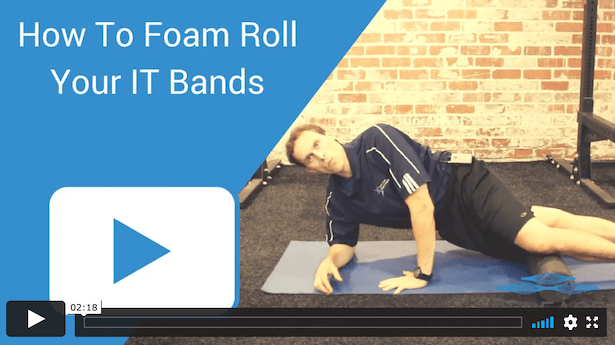
Foam Rolling The TFL And IT Band
Foam rolling the IT band is a great general technique to address the outside quadricep muscle, the IT band, as well as a small portion of the TFL muscle. Because of where the TFL is located, along with the size of the roller, you won’t be able to sufficiently access most of the muscle. You will need to use a lacrosse ball or select another technique or position to adequately address it.
After foam rolling, I would recommend a tensor fascia lata stretch for further improve the effectiveness of the work.
Tensor fascia lata stretches are essentially the same as some psoas stretch techniques, which some subtle differences found HERE.
Need help fixing TFL and IT band issues? Click below and lets talk.
Top 6 Hamstring Release Techniques
How to know if you may need to address the Hamstring Muscles:
- Posterior pelvic tilt
- Inability to touch toes
- Hamstring strain
- Lower back, hip, or knee pain
- Sacroiliac joint dysfunction
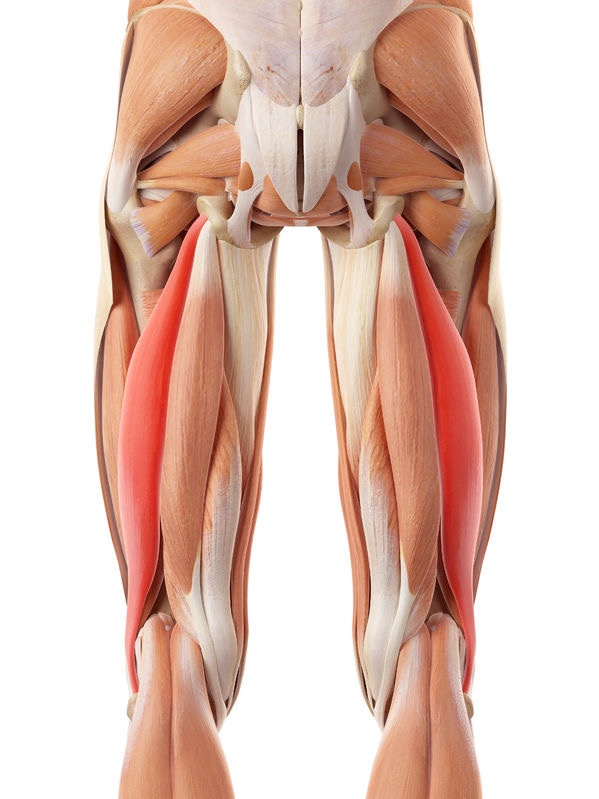
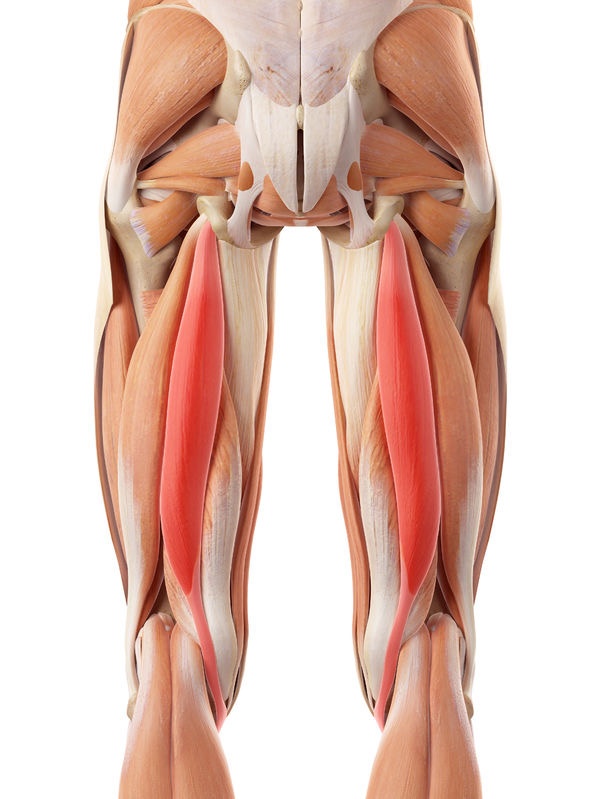
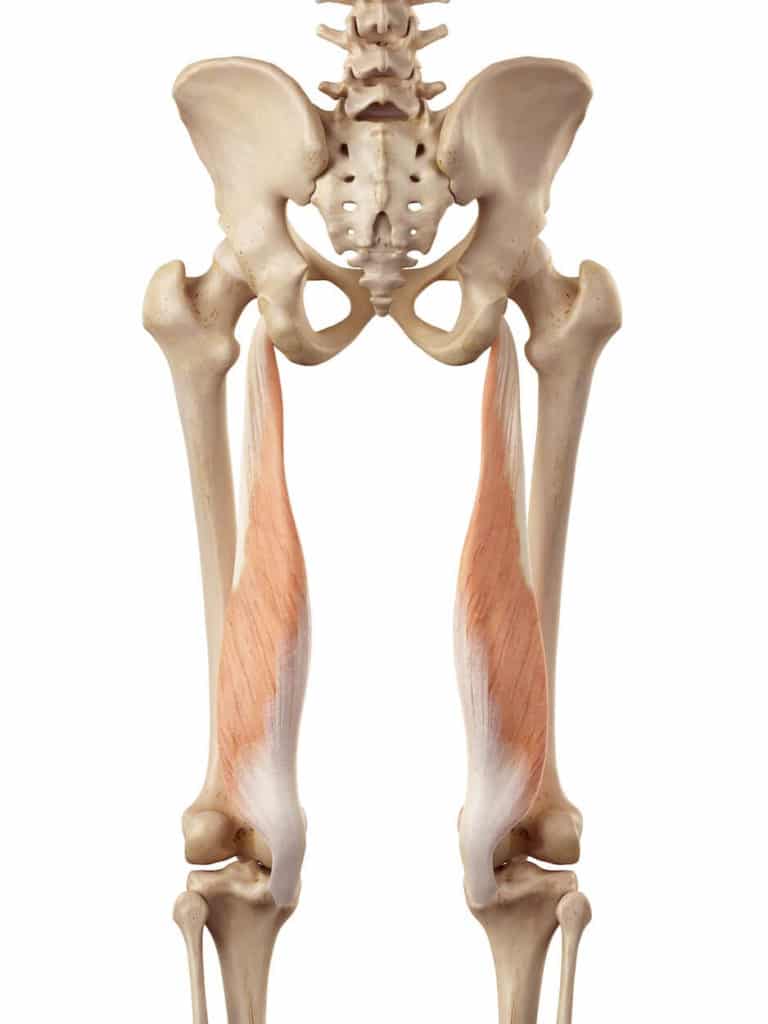
The hamstring muscle group consists of 3 muscles: Biceps Femoris, Semitendinosus, and Semitendinosus.
The most common finding in assessment to determine the need for hamstring stretching is inability to touch the toes, or the presence of posterior pelvic tilt in the standing position.
If these are found to be positive, then these hamstring release techniques may be utilized.
Are Your Hamstrings REALLY Tight?
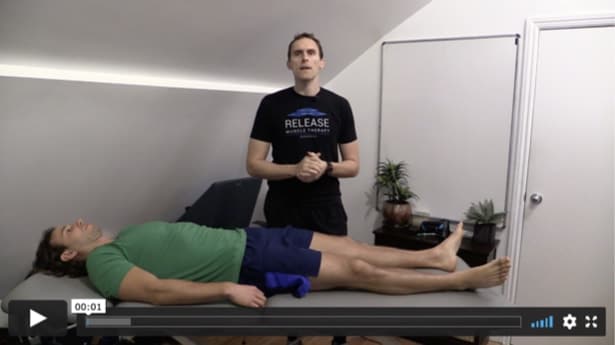
How do you know if your hamstrings are actually tight, or if they just “feel” tight?
It may surprise you to know that hamstring flexibility tests are often misinterpreted. Watch the video to see how to properly assess hamstring length.
Hamstring Massage Therapy Release Technique
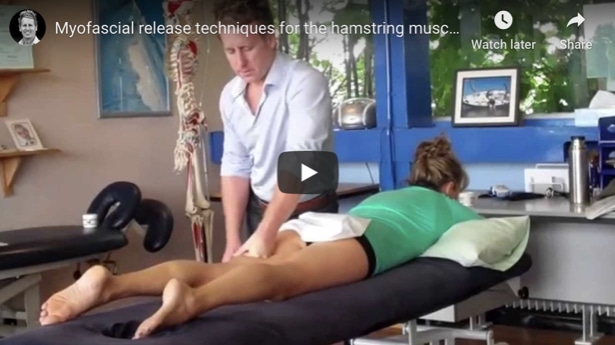
The hamstrings as a whole are fairly easy to treat when using an elbow or fist contact, however, isolating each hamstring can be challenging due to the thick, ropey-type element to the muscles.
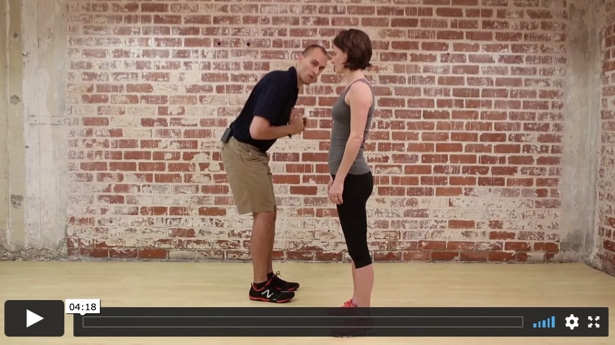
Hamstring Stretch – Waiters Bow
The waiter’s bow stretch is one of best options for stretching the hamstrings because it has the added benefit of teaching how to bend from the hips instead of rounding the lower back.
In addition, this strategy will transfer to movements like deadlifts and traditional back extension exercises.
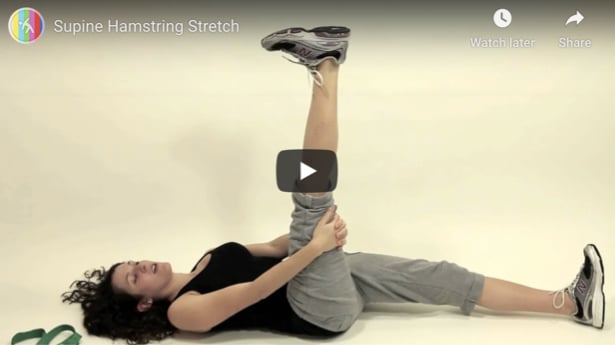
Hamstring Stretch – Supine Hip at 90 Degrees + Knee Extension
The supine hamstring stretch is an excellent option for applying the muscle energy technique called reciprocal inhibition. This technique works by activating the opposite muscle/s of the one you want to stretch. Specifically in this example, you will activate your quadricep muscles to inhibit your hamstrings.
This will allow for a greater stretch through neurological inhibition of the hamstrings!
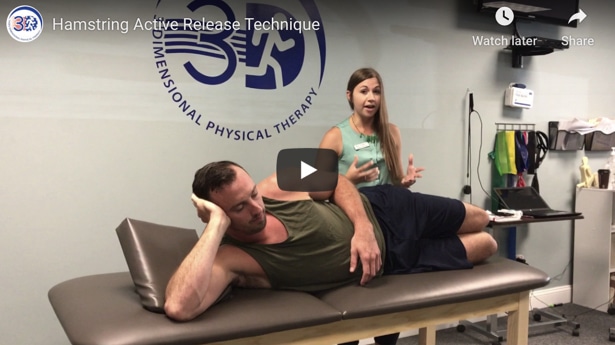
Hamstring Active Release Technique
Active release technique is a proprietary soft tissue therapy technique that can be effective for hamstring work. This video shows a great demonstration.
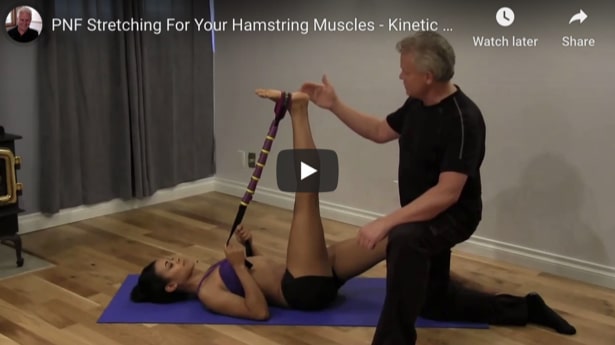
Hamstring Release Techniques – Post Isometric Relaxation (PNF version)
Post-isometric relaxation is another form of muscle energy technique that allows for achieving a greater range of motion than just stretching can accomplish alone.
By moving the hamstrings toward the stretch position, contracting them with a low level effort for 8-10 seconds, followed by a short rest (2-5 seconds), you will be able to move your hamstrings to a greater degree into the stretch.
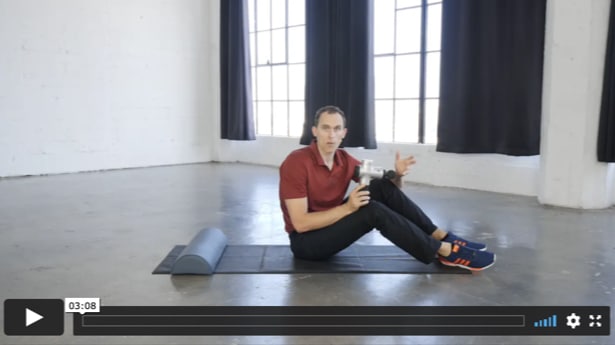
Hamstring Release – Percussion Therapy Tool
Percussion massage tools (<- affiliate link) are becoming more popular and for good reason. They can assist with improving results with massage therapy work, as well as self-myofascial release.
This technique combines reciprocal inhibition of the hamstrings (through quadricep activation) with percussion to the hamstrings to assist with relaxation.
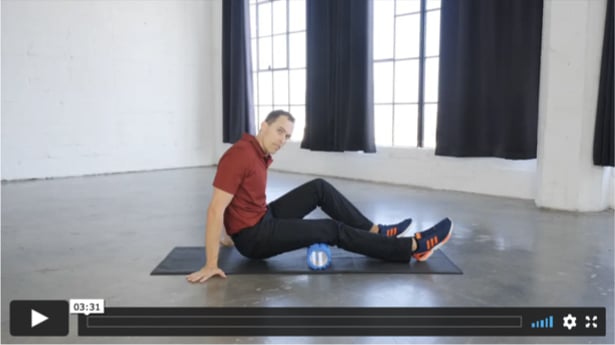
Hamstring Release – Foam Roller Self-Massage
Self-massage for the hamstrings is easily do-able with a standard foam roller. The goal is to roll with a light-moderate level of discomfort that allows you to comfortably work on the tissues.
When you find areas that are particularly tender, hold those points for 10-15 seconds, then move to another area.
Continue this process until you treat the areas that you can access effectively.
Are you in the Los Angeles area and need help with hamstring issues? Click below and lets talk.
Best 4 Pec Minor Release Techniques
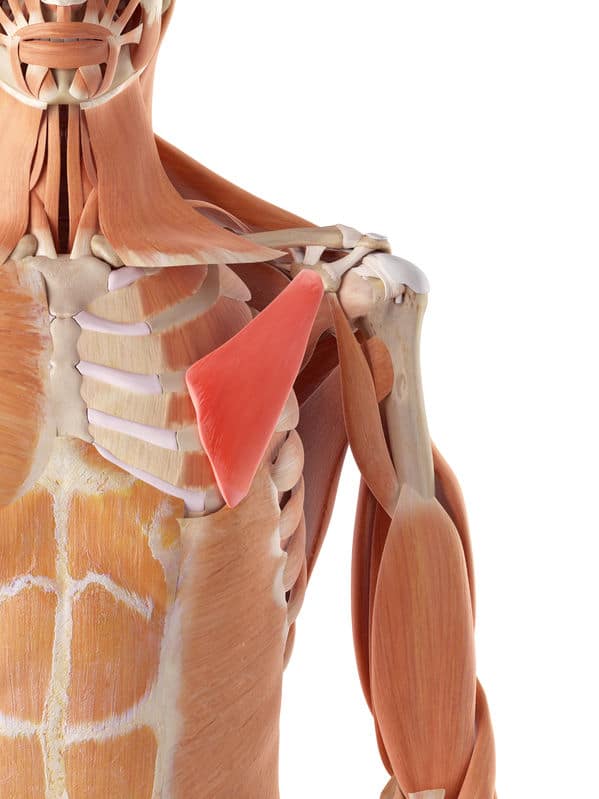
Most people are quite familiar with the larger, more superficial chest muscles, called the pectoralis major, however, underneath this muscle is another, called the pec minor. The pec minor release techniques later in this article will be specific to this muscle.
This muscle is very important to address, since it’s responsible for pulling the shoulder blade forward and down onto the ribs. (contributing to the rounded shoulders appearance).
If during an evaluation there is an upper cross syndrome with rounded shoulders and excessive forward head positioning, this muscle should be addressed.
For the most part, in any upper body impairment the pec minor is likely to be strongly involved.

Pec Minor Release w Tennis Ball
The pectoralis minor can be addressed with a tennis ball. This is one of my favorite self pec minor releases. Now, one thing to mention here is that you will NOT be making contact directly with the muscle.
Since the pectoralis major lays over the top, you’ll be influencing the pec minor indirectly with this technique. You will need to play with ball positioning to find the most tender spots.
Pec Minor Release Massage
Addressing the pec minor with massage release techniques can be very powerful and useful. My favorite position for this is side lying, as it allows for gravity assistance in moving the pec major out of the way.
However, some therapists prefer to do this supine (client laying on their back). The preference will ultimately depend on the anatomy of the individual, and the therapist’s ability to feel the muscle.
Pec Minor Stretch
The pec minor can be challenging to stretch due to how deep the muscle is and it’s function.
It’s not uncommon to feel either a stretch OR some discomfort on the front of the shoulder when attempting to stretch the pec minor. Therefore, take your time when setting up this stretch and avoid being too aggressive.
Pec Minor Release – Post Isometric Relaxation
Post-isometric relaxation is very effective for the pec minor muscles.
A therapist is needed for this technique.
Lay on your back with arms down at sides. The therapist will guide the shoulder slightly up away from the nipple as well as down toward the table. You do NOT need to go far with this stretch.
Hold for 8-10 seconds, take a deep breathe in, and exhale as you attempt to relax further into the stretch. Next, while maintaining a light stretch, gently push the shoulder into the hand of the therapist with about a 10-15% percent effort.
Hold for 10 seconds, then take a deep breath and relax fully, allowing the therapist to take up the slack and see if the stretch can be taken a bit further. Repeat 2-3 more times or until no additional range of motion is achieved.
Thanks for checking out my recommended best pec minor release techniques.
As always, no muscle should be seen as the sole contributor to any given problem. No muscle works in isolation.
It’s always best to approach muscular imbalances with a systemic approach to get the best results. That is why I developed my Posture Hacking System.