
The Top 4 Techniques For TFL and IT Band Release
The tensor fascia lata (TFL) is a muscle located on the front of the hip and merges into the iliotibial band (IT band). It is often associated with a variety of movement pattern imbalances and pain in the lower back, pelvis, hips, and knees.
This muscle should be addressed in all of the above issues.

How to know if you need to address the TFL and IT Band:
- Lower back pain
- Sacroiliac joint pain
- Hip pain
- Excess anterior pelvic tilt
- Knee pain
TFL Muscle Anatomy And Function
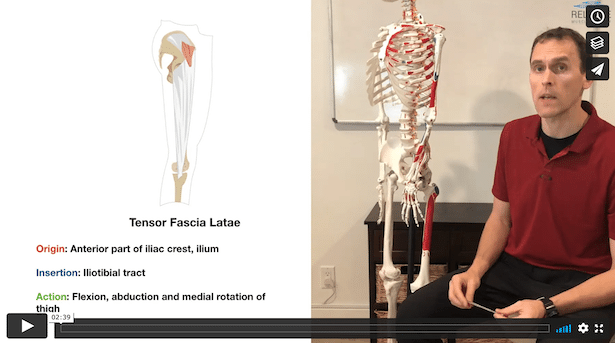
Origin: Anterior part of iliac crest, ilium
Insertion: Iliotibial tract (IT band)
Function/s: Flexion, abduction and medial rotation of the thigh
Functional action: Decelerate external hip rotation, abduction, and extension
Innervation: Superior gluteal nerve, L4, L5, and S1
Most Common IT Band And TFL Questions
How do you release the TFL muscle?
The tensor fascia lata can be released with hands-on massage techniques, self massage techniques (SMFR) such as foam rolling, or with neuromuscular techniques such as muscle energy. In this blog you’ll find demonstration videos for all these options.
What causes tight TFL?
The TFL is a very common compensatory muscle. Its often over-active as an internal hip rotator, especially when the pelvis is positioned in excessive anterior pelvic tilt. When the opposing muscles are weak, this muscle will become dominant and become facilitated. Therefore, a TFL muscle stretch may be warranted.
What does TFL pain feel like?
Pain in the TFL can either be sharp (usually during single leg standing or when lifting your leg in front of you), or a dull ache when walking up or down stairs. If the muscle is short and tight, it can also be a contributor to sacroiliac and/or lower back region pain.
How do you fix overactive TFL?
Reducing the effect of an overactive tensor fascia lata involves two parts:
- Reducing excess muscle tone with TFL release techniques (described later in this article)
- Increasing activity in the muscles that both oppose and synergistically work with the TFL.
While release techniques can provide relatively rapid results including pain relief, exercise work should be the primary focus over the long term. TFL muscles can be effectively stretched as part of a full range of motion exercise strategy as well.
How do you check TFL tightness?
The Ober Test and Thomas Test both reveal reduced range of motion in the hips that is related to TFL and IT band tightness.
Why does the IT band get tight?
Since the IT band is not a contractile tissue, it does not become tight, and thus there is no true IT band release techniques. There are, however, muscles that attach to the band, including the tensor fascia lata (TFL) and the gluteals. In addition, the band lays over a commonly tight muscle, which is the vastus lateralis (a quadricep muscle), which is usually the source of the tenderness which is often felt during IT band massage therapy or foam rolling.
Should you foam roll your IT band?
Foam rolling is a version of IT band self massage, and can be helpful for addressing the muscle that lies beneath the IT band, which is the vastus lateralis. It’s important to understand that releasing the IT band itself is not possible.
TFL Trigger Points
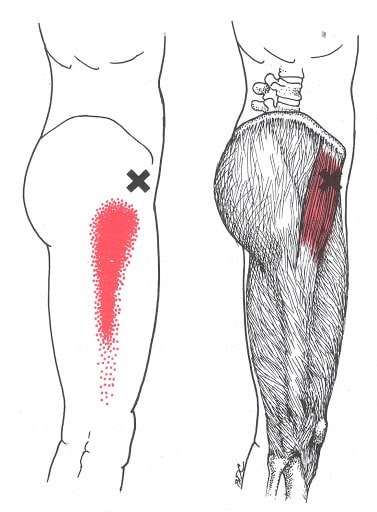
TFL trigger points are routinely found, and can often refer sensation down the lateral aspect of the thigh. This referred sensation location can be familiar to those dealing with pain in this area.
They are often quite tender, and light to moderate pressure is usually all that is necessary to diminish sensitivity.
Top Tips For Dealing With TFL + IT Band Pain
-
Avoid crossing legs -
Strengthen all glute muscles to opposite TFL -
Professional or self-massage techniques to reduce TFL over-activity -
Re-training exercises to balance hip musculature and reduce TFL dominance
Seated TFL Massage Technique
Addressing the tensor fascia lata muscle in the seated position is an easy way to locate the muscle and get enough leverage to work it.
In this position, the TFL is shortened, which means its not an ideal position to attempt to stretch it, but regardless, it can reduce tissue strain and also allow you to self-treat without too much difficulty.
Word on caution here: Be nice to your thumbs!
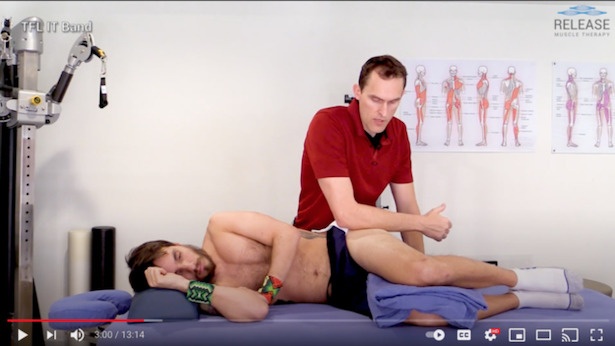
TFL and IT Band Massage
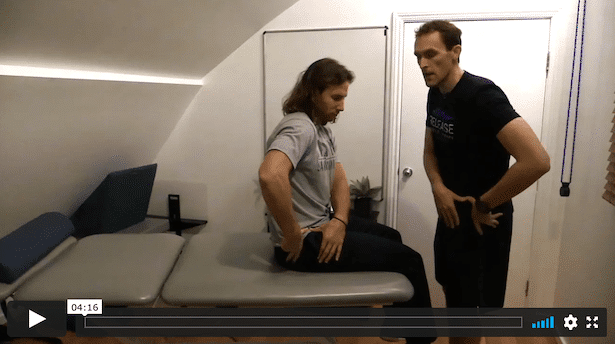
With IT band massage, we are really addressing the lateral quadricep, called the vastus lateralis, which lies under the iliotibial band.
Since the TFL merges into the IT band superiorly, we should address that too in the same massage session.
In the video below, I’ll show you step-by-step how to massage the IT band along with the tensor fascia latae and vastus lateralis.
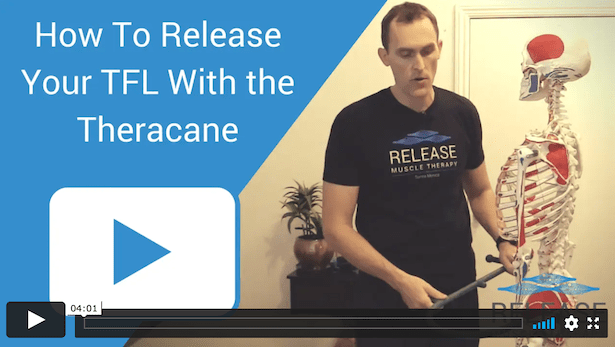
TFL and IT Band Theracane Self-Massage
The Theracane is a great tool for self-treating the TFL in the standing position. The key is proper placement of the tool, as well as shifting your bodyweight to the other leg.
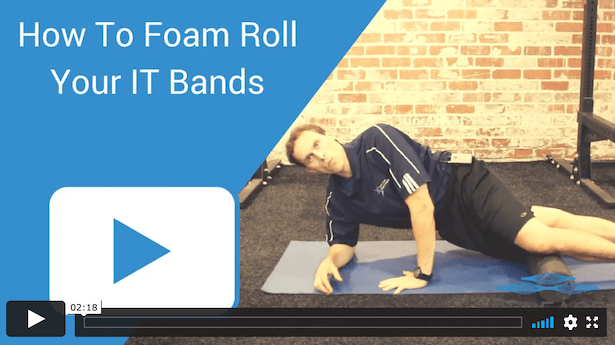
Foam Rolling The TFL And IT Band
Foam rolling the IT band is a great general technique to address the outside quadricep muscle, the IT band, as well as a small portion of the TFL muscle. Because of where the TFL is located, along with the size of the roller, you won’t be able to sufficiently access most of the muscle. You will need to use a lacrosse ball or select another technique or position to adequately address it.
After foam rolling, I would recommend a tensor fascia lata stretch for further improve the effectiveness of the work.
Tensor fascia lata stretches are essentially the same as some psoas stretch techniques, which some subtle differences found HERE.